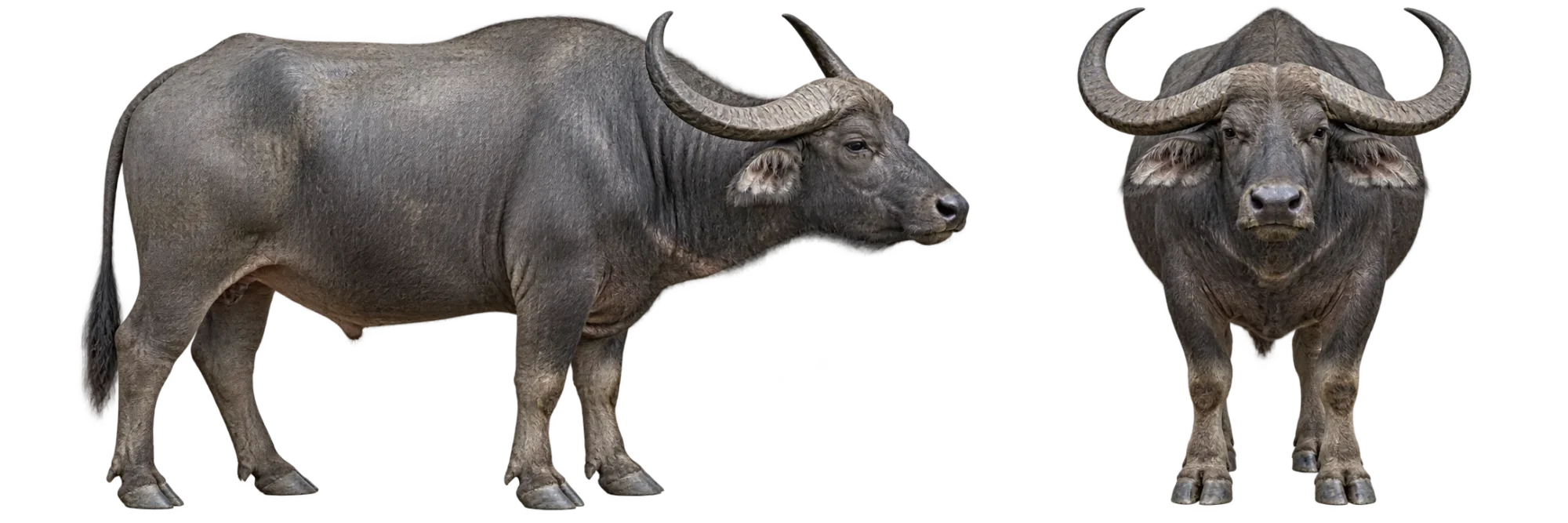
The domestic water buffalo, Bubalus bubalis, has a life history shaped by slow reproduction, prolonged maternal investment, and large differences between river and swamp buffalo. A single age, interval, or lifespan value can hide much of that variation. Reproductive timing changes with genetic type, nutrition, climate, season, and husbandry, so the biological pattern is better understood as a range of related strategies rather than one fixed schedule.
River and Swamp Buffalo Follow Different Biological Timelines
Domestic water buffalo are commonly divided into river buffalo and swamp buffalo. The distinction reaches deeper than appearance or agricultural use. River buffalo have 50 chromosomes, while swamp buffalo have 48. Their reproductive development also tends to proceed at different rates.
Under favorable conditions, female river buffalo may reach puberty at roughly 15–18 months, while swamp buffalo commonly mature later, around 21–24 months. These are biological ranges rather than deadlines. Across real herds, puberty can be delayed considerably when growth is slower or nutrition is limited.
The two forms can interbreed. Their first-generation offspring usually have 49 chromosomes. This makes water buffalo unusual among large domestic mammals: animals grouped under the same familiar species name can carry different chromosome counts while remaining closely related enough to produce offspring.
This biological split also explains why reproductive figures reported for one buffalo population should not automatically be treated as universal values for the species.
Reproduction Is Built Around a Long Pregnancy and Usually One Calf
Water buffalo invest heavily in each pregnancy. Gestation in river buffalo is commonly reported at about 305–320 days, although wider ranges occur in the literature and among populations. A cow normally gives birth to one calf. Twin births can occur, but they are not the usual reproductive pattern.
The combination of a long pregnancy, postpartum recovery, and the time required to conceive again naturally limits how quickly females can produce successive calves. Reported calving intervals often extend well beyond one year. In many river buffalo populations they fall around 15–21 months, while carefully managed herds may achieve shorter intervals.
Season Can Change the Reproductive Pace
Water buffalo are capable of reproductive activity throughout the year, yet fertility often develops a seasonal rhythm. Buffalo tend to respond favorably to decreasing day length, and this pattern becomes more noticeable farther from the equator.
Photoperiod is only part of the picture. Temperature, rainfall, feed availability, body condition, and local management can all alter ovarian activity and conception. In tropical settings, a seasonal change that appears to be purely reproductive may partly reflect heat or changing forage quality. In temperate areas, day length can exert a stronger influence.
A long interval between two births is not produced by gestation alone. The time from calving until ovarian cycles resume, successful mating or insemination, nutrition, season, and health can all add months to the reproductive cycle.
The estrous cycle itself averages close to 21 days, but visible signs of estrus can be less obvious than in domestic cattle. This matters when reproductive records come from managed herds, because missed estrus can lengthen the recorded interval between calving and conception without changing the underlying length of pregnancy.
Body Growth Strongly Influences the Timing of Maturity
Age alone is a poor predictor of when a young buffalo becomes reproductively mature. Female buffalo commonly approach puberty after reaching roughly 60% of adult body weight. Nutrition and growth rate therefore have a direct effect on when reproduction becomes possible.
This helps explain the broad puberty ranges reported across water buffalo populations. Two females of the same age can be at different reproductive stages if one reached its growth targets sooner. Breed, buffalo type, climate, disease burden, and feeding conditions can widen that gap further.
Puberty should also be kept separate from first calving. A female must mature, cycle, conceive, and then complete a pregnancy lasting about ten months before producing her first calf. First-calving ages are therefore much later than the earliest reported ages of sexual maturity.
Males follow a different schedule. Viable sperm can appear around two years of age in well-developed animals, while full reproductive performance may continue developing beyond that point. Male and female maturity values should therefore remain separate rather than being compressed into one species-wide age.
Maternal Investment Continues Intensively After Birth
Birth does not end the buffalo cow’s reproductive investment. The first hours after calving establish a close mother–calf relationship through licking, smell, vocal contact, and suckling. Current work on buffalo maternal behavior describes a particularly sensitive early postpartum period in which these interactions help establish recognition between the cow and her calf.
Early suckling also provides colostrum. Like other bovids with this type of placenta, newborn buffalo calves receive very little antibody protection across the placenta before birth. Colostrum supplies the immunoglobulins needed for passive immune protection during early life.
The calf is mobile soon after birth, yet nutritional dependence continues for months. Natural nursing can extend far beyond the neonatal stage. Reported weaning ages vary because farm practices can separate calves earlier than would occur under unrestricted suckling.
This distinction matters when interpreting a recorded “weaning age.” In domestic water buffalo, it may describe a management decision rather than the point at which a calf would naturally stop nursing. Early separation, restricted suckling, and dam–calf rearing systems create very different developmental schedules even within the same breed.
Biological Longevity and Productive Life Measure Different Things
Water buffalo can survive far longer than the working or productive lifespan recorded on many farms. Verified longevity databases report captive individuals reaching about 35 years. That figure represents observed maximum longevity, not the age most buffalo can be expected to reach.
Farm populations tell a different story. Animals may leave a herd because of fertility, health, milk production, breeding decisions, or other management reasons. Studies of dairy populations have therefore reported average or productive lifespans far below the biological maximum.
A female that remains healthy and fertile can reproduce across many years, giving water buffalo the capacity for a long reproductive career. Whether that potential is expressed depends heavily on the conditions under which the animal lives and how long it remains in the breeding population.
 American bisonBison bison
 Domestic sheep, or MouflonOvis aries
 Domestic cattleBos taurus
 Domestic goatCapra hircus