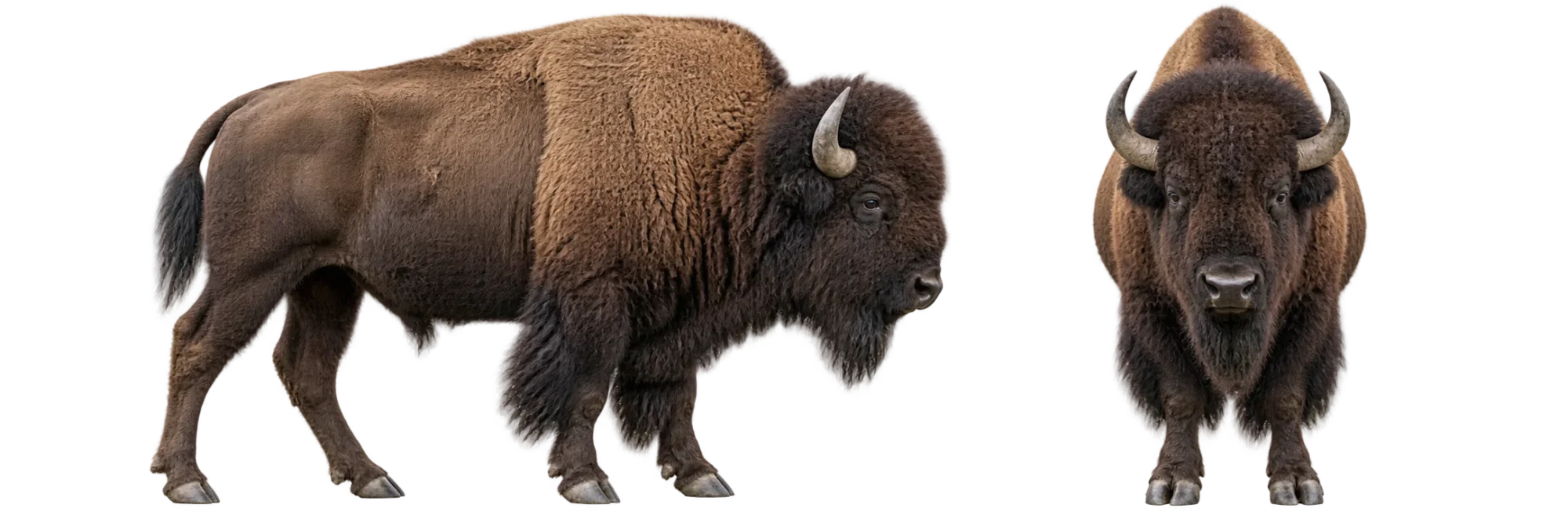
American bison (Bison bison) reach reproductive adulthood on two very different schedules. Cows can begin producing calves while still relatively young, while bulls may be physically capable of reproduction years before they become regular breeders. That gap, combined with a tightly seasonal rut and a single-calf reproductive pattern, shapes much of the species’ life history.
Female and Male Breeding Schedules
Female American bison commonly become reproductively mature at about two to three years of age. Some females breed at the younger end of that range, especially when growth and body condition are favorable. Research on female bison has found that larger juveniles can mature earlier, showing that calendar age alone does not determine when reproduction begins.
Early reproduction also carries a biological cost. A young cow is still allocating energy to her own growth when she first becomes pregnant and raises a calf. Studies of female bison have found links between early maturation, reduced later growth, and a greater chance of missing reproduction after the first birth. These effects do not make early breeding unsuccessful; females that mature early can still achieve high reproductive output during their younger adult years.
Young bulls follow a different path. Puberty can occur well before a male becomes an effective breeder in a natural herd. Studies of developing bulls have recorded puberty during the second year under managed conditions, while field observations show that mature, older bulls account for much of the actual mating. In wild herds, males commonly become regular breeders around six years of age or later.
The delay is largely competitive. During the rut, a bull must do more than produce viable sperm. He must locate receptive cows, remain close to them, and displace or deter rival males. Body size, strength, age, and social position therefore affect reproductive success long after basic sexual development has begun.
The Rut and Spring Calving Cycle
American bison reproduction is strongly seasonal. The main rut occurs in summer, commonly from July into August in well-studied wild populations, although the broader breeding period can extend from late June into September depending on the herd and location.
During this period, a bull may form a temporary association with a cow that is approaching estrus. He stays close to her and attempts to keep competing males away. Once mating has occurred, he can move on to another receptive female. Bulls do not form long-term pair bonds with cows and do not provide parental care to calves.
Gestation lasts roughly nine to nine and a half months, or about 285 days in commonly cited observations. Summer conception therefore places most births in spring. In Yellowstone, most calves are born during April and May, although the exact timing can differ between herds and years.
Spring calving should not be treated as one fixed date for the species. Yellowstone research has found differences in median birth timing between herds living under different environmental conditions. Local forage cycles, maternal condition, elevation, and the timing of the previous breeding season can shift the calving pulse.
This seasonal schedule places early lactation and rapid calf growth close to the period when new plant growth becomes widely available. For a large grazing mammal, the timing connects maternal energy demand with a part of the year when forage conditions generally improve.
Calves Enter the Herd Quickly
A cow normally produces one calf in a breeding cycle. Twins can occur but are unusual. This low number of offspring is paired with prolonged maternal investment rather than the production of many young at once.
Newborn bison are precocial. They can stand and move soon after birth, and observations in Yellowstone show that calves may be able to travel with the herd within only a few hours. Rapid mobility matters for an animal born into a moving social group rather than a permanent nest or den.
The calf remains dependent on its mother for milk for much longer than its first burst of physical independence might suggest. Nursing commonly continues for about seven to eight months, and complete weaning generally occurs by the end of the first year. The cow provides the direct parental care; bulls do not participate in rearing young.
A calf’s reddish or rusty coat also changes during its first months. The juvenile coloration gradually gives way to the darker brown appearance associated with older bison. Physical growth continues for years after the calf has stopped nursing, so weaning, sexual maturity, and full adult size represent separate stages rather than a single transition into adulthood.
Body Condition Shapes Reproductive Pace
The ability of a mature cow to reproduce in a given year depends partly on the energy available for pregnancy, lactation, maintenance, and any remaining body growth. A healthy adult female can produce calves in successive years, but annual reproduction should not be treated as guaranteed for every cow throughout life.
Long-term work on female bison has shown that reproduction and growth interact differently as females age. Young animals face the strongest overlap between continued growth and the demands of producing a calf. Among adults, year-to-year changes in body condition can also influence the likelihood of pregnancy.
Producing calves in consecutive years can affect maternal investment as well. Research comparing reproductive histories found that offspring quality could differ when females reproduced in successive rather than alternating years. The pattern illustrates why a simple count of calves per birth does not fully describe reproductive effort in bison; the spacing of births and the condition of the mother also matter.
Adult Lifespan and Reproductive Years
Wild American bison commonly live for roughly 12 to 20 years, while animals under human care can survive longer. Records from managed settings should not be read as the expected lifespan of every wild individual because survival conditions differ greatly between free-ranging and captive populations.
For females, this lifespan creates the possibility of many breeding seasons after maturity. Reproduction can continue well into adulthood, although fertility, body condition, environmental conditions, and survival determine how many calves an individual cow actually produces.
Male reproductive opportunity is compressed in a different way. Bulls may be physiologically mature when young, yet their strongest access to females generally comes after several more years of growth. A male that reaches older adulthood has therefore spent a substantial portion of its life developing before entering the age classes that account for much of the mating in natural herds.
This difference between early female reproduction and later male breeding success creates two distinct routes through the same life cycle. Cows can begin contributing offspring while still completing their own growth, while bulls gain much of their reproductive advantage only after body size and competitive ability have had years to develop.
 Water buffaloBubalus bubalis
 Domestic goatCapra hircus
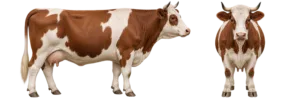 Domestic cattleBos taurus
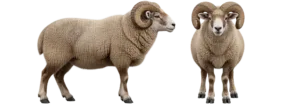 Domestic sheep, or MouflonOvis aries