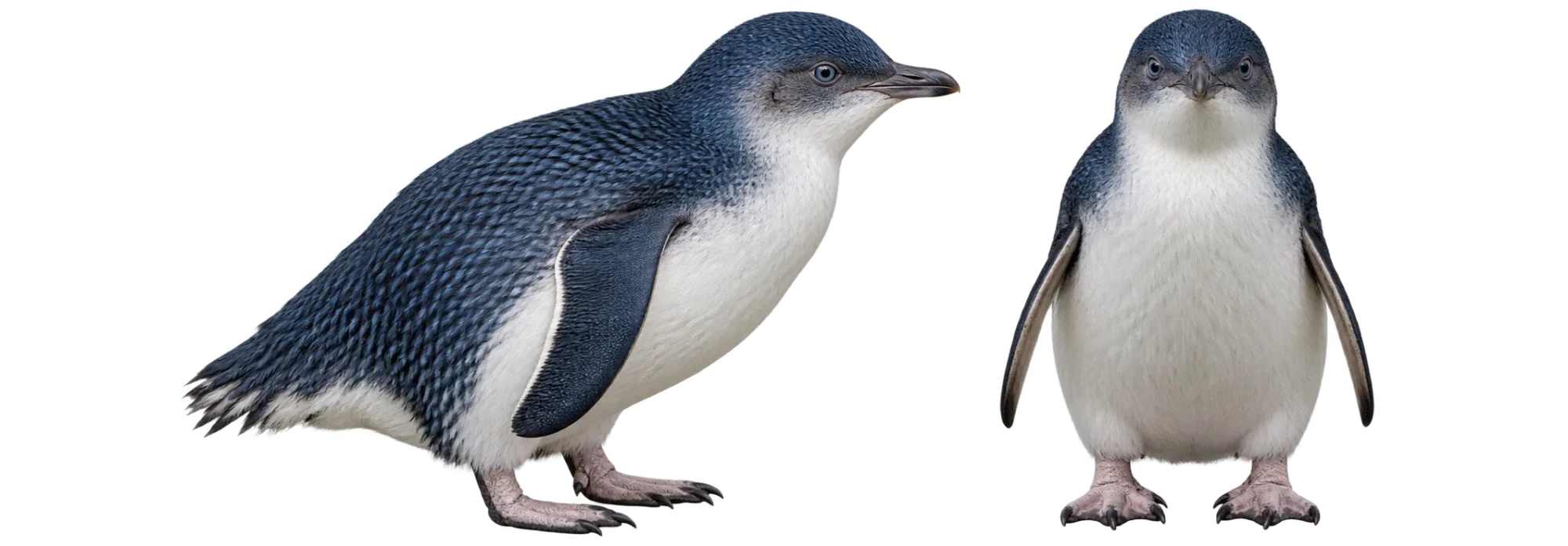
For little penguins, events early in life can echo for years. Breeding date affects the chance of raising chicks successfully, while differences in nestling growth have been linked with later survival, age at first breeding and lifetime reproductive output.
Breeding Date Can Affect the Following Season
Little penguin breeding is unusually flexible for a seabird. Colonies do not all follow the same calendar, and even within one colony, pairs may begin nesting at quite different times. Long-term work at Phillip Island in southeastern Australia shows that this variation is more than a difference of a few dates on the calendar.
Birds breeding later in the season tended to have lower breeding success and lighter chicks at fledging. Late breeders were also less likely to produce a second clutch. Their body condition after breeding was poorer, which can matter because reproduction ends only a short time before other demanding parts of the annual cycle.
A Carry-Over Effect
Twenty years of breeding records at Phillip Island found that a late breeding attempt could be followed by later laying, a lower probability of breeding and poorer breeding success in the next season. The timing of one reproductive attempt can therefore influence the biological starting point of the next.
Condition before breeding matters as well. Earlier work on the same population found that birds carrying more body mass during winter were more likely to breed early. For males, higher winter mass was also associated with a better chance of breeding successfully.
Chick Growth Is Linked With Adult Life History
Growth before fledging does not follow one identical path in every little penguin chick. A 26-year study published in 2025 examined more than 2,200 growth records from Phillip Island and found broad differences in how quickly chicks grew, how much mass they reached and how long growth continued.
The researchers grouped the observed trajectories into fast, slow and light patterns. These were not separate biological types; the underlying growth measurements formed a continuum. The groups were used to test whether early growth was associated with later stages of life.
The differences continued beyond the first year. Penguins in the fast-growth group began reproducing earlier on average than birds in the slower group. They also produced more eggs across their recorded lives. Some individuals from the fast-growth group lived to 21 years in the long-term dataset.
These figures belong to one intensively monitored population and should not be treated as fixed values for every little penguin colony. Their value lies in showing that conditions during the few weeks of chick growth can be associated with events many years later.
Fledging Begins an Independent Marine Stage
Little penguin chicks spend their first weeks dependent on both parents. The adults alternate between the nest and the sea, first keeping young chicks guarded and later leaving growing chicks alone while both parents forage.
At roughly eight weeks of age, a chick leaves the nest and enters the sea. There is no prolonged period in which a parent teaches it to hunt. Swimming, diving and finding prey begin as an independent phase of life.
Young birds from Phillip Island can travel farther than established adults during their first year. They may later return to the colony before they are old enough to breed. Reproduction commonly begins at about two to three years of age, but the 2025 long-term study showed that early growth history can shift the timing of first reproduction.
The First Year Is Highly Selective
The low first-year survival recorded in long-term studies makes the transition from nestling to independent seabird one of the most selective periods in the little penguin life cycle. Fledging marks the end of parental feeding, not the end of development into an experienced forager and breeder.
Annual Moult Creates a Fasting Period on Land
Once each year, little penguins replace their plumage in a concentrated moult. Unlike birds that replace feathers gradually while continuing normal activity, penguins lose and regrow their waterproof coat over a short period. During this time they cannot forage at sea.
Little penguins therefore build body reserves beforehand and remain ashore for roughly two to three weeks while the new plumage develops. The stored energy must cover maintenance through the fasting period.
Long-term monitoring at Phillip Island found that weather conditions during moult were more closely associated with annual adult survival than conditions during breeding. The distinction is biologically important: a breeding bird can sometimes reduce investment in a nesting attempt when conditions deteriorate, while a moulting penguin ashore has temporarily lost access to its marine food supply.
Heat, humidity and rainfall can therefore interact with a stage that is already constrained by fasting. This annual episode links feather replacement, stored body reserves and adult survival in a short but demanding part of the little penguin’s yearly cycle.
 Emperor penguinAptenodytes forsteri
 Adelie PenguinPygoscelis adeliae
 King penguinAptenodytes patagonicus
 Jackass penguinSpheniscus demersus