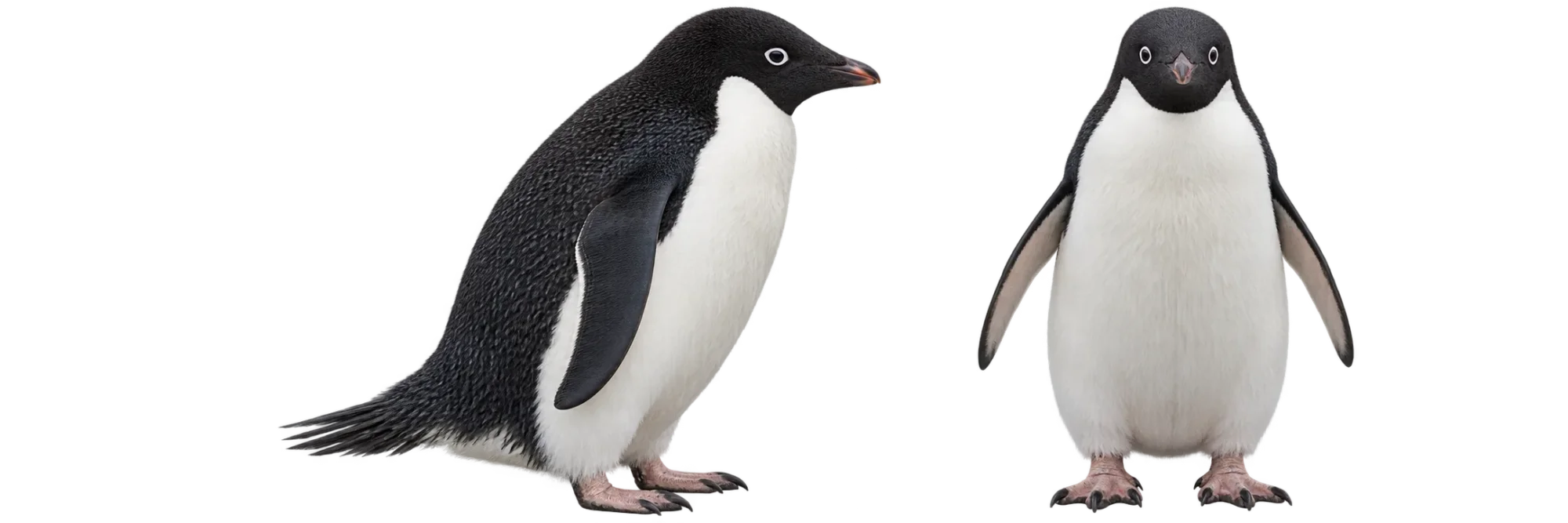
Adélie penguins (Pygoscelis adeliae) fit their entire breeding cycle into a narrow Antarctic summer window. Adults return to land, establish or reclaim pebble nests, incubate their eggs, raise fast-growing chicks and send those young to sea within only a few months. That compressed schedule makes parental coordination and the timing of each stage central parts of the species’ life history.
Breeding Is Compressed Into the Antarctic Summer
Adults reach their breeding colonies during austral spring, often returning to a nest site used in an earlier season. Males commonly arrive first. Previous partners may reunite when both birds return, but successful breeding depends on more than pair fidelity: the nest must also be ready while seasonal access to feeding areas is changing.
At Béchervaise Island in East Antarctica, two eggs are generally present by mid-November. Chicks hatch during December, reach the group-forming stage in January and are usually ready for the sea during February. The sequence is tight enough that a delay early in the cycle can reduce the time available for chick growth before summer ends.
Breeding Dates Depend on the Colony
Calendar dates recorded at one Adélie colony should not be treated as fixed dates for the entire species. Latitude, sea-ice conditions, local weather and food access can shift laying and hatching dates from one colony or year to another.
The nesting site itself also matters during spring thaw. Adélies build shallow nests from stones on exposed ground, and sloping or well-drained sites help keep meltwater away from eggs and small chicks.
Incubation Runs on Long Alternating Shifts
A normal clutch contains two eggs, and incubation lasts about five weeks. Both parents take part. Instead of making short daily exchanges, an adult may remain at the nest for many days while its partner travels to sea and feeds.
At Béchervaise Island, the first two incubation shifts commonly last about 11 to 14 days, with later shifts becoming shorter. The bird on the nest protects the eggs and relies on stored body reserves, while the other adult restores its own reserves at sea before returning to relieve its partner.
This relay links reproduction directly to conditions beyond the colony. When open water or productive feeding areas are far from the nest, a foraging parent may have a longer journey before it can return. Sea ice therefore affects more than movement: it can alter how easily the pair maintains the incubation schedule.
Long-term observations also show strong attachment to established nesting areas. Returning to a familiar site can place an experienced bird back into a breeding routine it has already completed in earlier years rather than forcing it to establish a new nesting location each season.
The Crèche Stage Changes How the Parents Feed Their Chicks
Newly hatched Adélie chicks cannot feed themselves and initially need close attendance. During the first weeks after hatching, one parent generally remains with the chicks while the other forages. The adults exchange duties and deliver food by regurgitation.
At around three weeks of age, the chicks become large enough to spend periods without a parent standing over them. They gather with other young penguins in groups known as crèches. This marks an important change in the breeding cycle because both parents can now be at sea at the same time.
Once simultaneous foraging becomes possible, the pair can direct more effort toward supplying rapidly growing chicks. Growth during this period is fast, and local food availability can affect both chick condition and fledging mass.
The young replace their insulating down with waterproof juvenile plumage before leaving the colony. Fledging commonly occurs at roughly seven to nine weeks of age. Parental feeding then ends, and the young penguin must begin finding food independently at sea.
Years Separate Fledging From the First Breeding Attempt
Leaving the colony does not immediately place a young Adélie penguin into the breeding population. Tracking from East Antarctica has shown fledglings moving away from their natal colony after entering the sea and remaining away for years. Returns to the colony may begin roughly two to five years after hatching.
Returning to a colony and actually breeding are also separate events. Studies at Cape Crozier have recorded first breeding at about three to seven years of age in females and four to eight years in males. Long-term work elsewhere on Ross Island shows that recruitment age can vary even more among individuals and colonies.
That variation matters because reproductive performance changes with experience. In a long-running study of known-age Adélie penguins, the first breeding attempt had the lowest success regardless of the age at which an individual began reproducing. Performance generally improved during later attempts as breeding experience accumulated.
Breeding after recruitment is not necessarily uninterrupted. Some experienced adults are present in a breeding population during seasons in which they do not make a confirmed nesting attempt. The reproductive life of an Adélie penguin is therefore a sequence of individual decisions and seasonal outcomes rather than a simple run of annual breeding from first maturity onward.
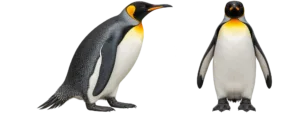 King penguinAptenodytes patagonicus
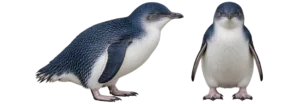 Little penguinEudyptula minor
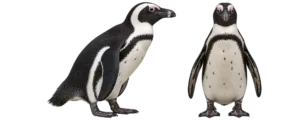 Jackass penguinSpheniscus demersus
 Emperor penguinAptenodytes forsteri