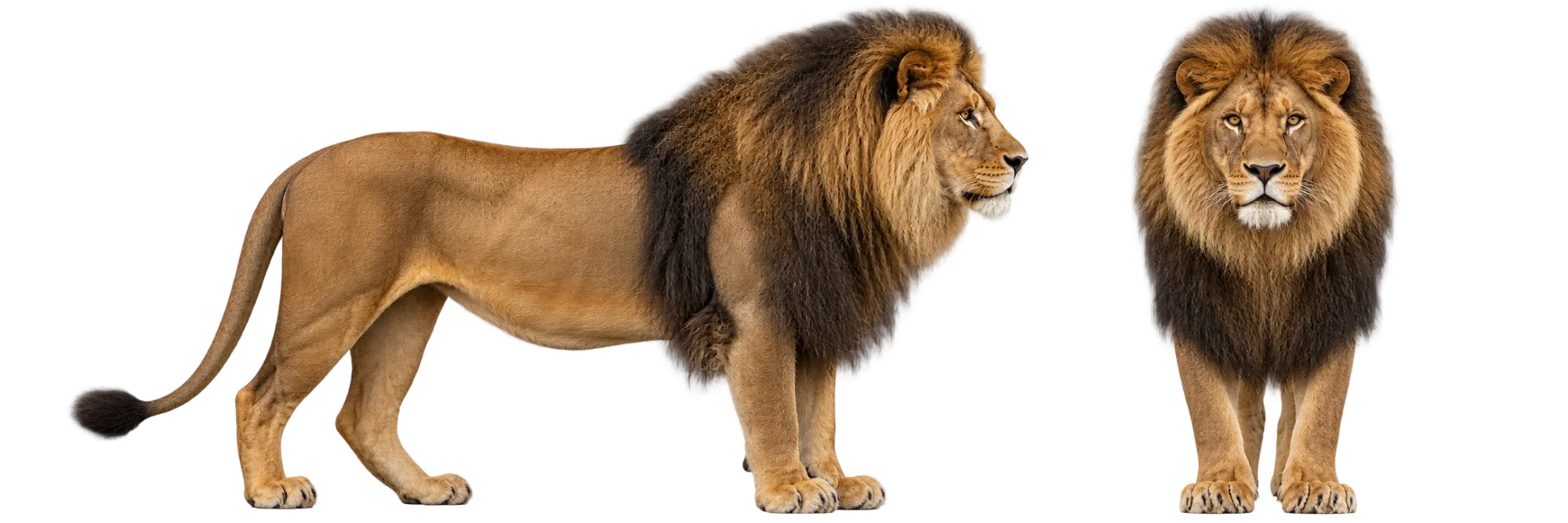
For lions, the interval between one litter and the next is shaped as much by pride stability as by pregnancy itself. A lioness carries cubs for about three and a half months, but successful rearing lasts far longer. Cubs remain dependent well after they begin eating meat, while related females and resident males can affect whether a litter survives long enough to reach independence.
Cub Survival Shapes the Interval Between Litters
Lions can reproduce throughout the year rather than following one fixed annual breeding season. Gestation usually lasts about 100 to 119 days, and a litter commonly contains one to four cubs.
The more revealing measure is the time between litters. When cubs survive, a lioness commonly has an interbirth interval of about two to three years. Much of that interval is occupied by nursing, guarding and supporting young that remain dependent on the pride.
If a litter is lost early, the schedule can change sharply. A lioness may return to reproductive condition much sooner because she is no longer supporting dependent cubs. For that reason, describing lions simply as animals that “give birth every two years” hides an important part of their reproductive biology. Birth spacing is conditional on what happened to the previous litter.
Early Cub Development Moves From Seclusion to a Crèche
A lioness normally separates from the pride around birth and keeps very young cubs concealed during their first weeks. This gives newborns a protected early phase before they begin moving with other lions. Mothers may introduce cubs to the rest of the pride at roughly five to eight weeks of age.
The transition into pride life does not make the cubs independent. They begin eating meat while still young, often at around three months, yet nursing continues for months afterward. Even after milk is no longer their main food, young lions still depend on adults for access to food, protection and the social environment in which they learn to function as members of a pride.
When several related lionesses have cubs at similar times, the young can be grouped in a crèche. Mothers may nurse cubs belonging to close female relatives as well as their own. Long-term studies of African lions have also found that female pride-mates tend to reproduce on relatively even terms rather than being organized around one dominant breeding female.
Communal rearing is therefore closely connected to synchronized reproduction. It does not mean that every adult female provides the same care at all times. Mothers with litters of their own are the main participants, and the benefit of having several mothers together includes collective protection of the young.
Male Pride Tenure Creates a Reproductive Time Window
Resident males add another clock to lion life history. A male or coalition may control access to a pride for only a few years. Current species accounts commonly place a period of pride tenure around two to three years, though real tenures vary.
That span overlaps closely with the time needed to rear a successful litter. Young cubs are especially vulnerable when a new male coalition takes control of a pride. Incoming males may kill dependent cubs that they did not sire. When this happens, the affected lionesses can return to estrus much earlier than they would have if the cubs had survived.
This links male competition directly to female birth spacing. A stable resident coalition gives cubs more time to pass through their vulnerable dependent stages. A takeover can interrupt that process and begin a new reproductive cycle before the previous one would naturally have ended.
Female cooperation also matters during these changes. Groups of lionesses can defend cubs more effectively than a mother acting alone, which helps explain why reproduction, communal cub rearing and pride membership are so tightly connected in this species.
Puberty and Breeding Access Arrive at Different Ages
A single “age at maturity” value cannot describe the whole transition into adult lion life. Physiological maturity, social independence and successful reproduction occur on different schedules.
In males, sperm production begins at roughly 30 months, but sexual capability does not mean immediate access to females. Young males normally leave their natal pride between about two and four years of age and often spend time as nomads or members of a developing coalition. Few males gain control of a pride and breed successfully before about five years of age.
Females can begin mating earlier. Reproductive activity may start from around two years, while successful reproduction is more commonly associated with lionesses older than three. Their social path is also different: many daughters remain with related females in their natal pride instead of entering a prolonged nomadic phase.
This produces two distinct routes into adulthood. A female can become part of the breeding structure of the pride in which she grew up. A male usually has to leave, survive outside that natal group and later gain breeding access through coalition competition. The biological ability to reproduce therefore comes before the social opportunity to do so for many males.
Adult Longevity Depends on Sex and Life Setting
Longevity figures for lions need context because a maximum record and a normal wild lifespan describe different things. Species-level summaries place lion longevity broadly around 12 to 18 years, but males and females do not follow identical survival patterns.
Field accounts often show females living longer than males. Lionesses may survive into their mid-to-late teens, while relatively few wild males reach the same ages. Male life includes dispersal, competition for pride tenure, eviction and encounters with rival coalitions, so reaching reproductive adulthood does not guarantee many years as a resident breeding male.
Captive records can extend much farther than typical wild survival, with exceptional individuals reported near 30 years. Such a figure is best treated as a maximum longevity record, not as the lifespan expected for an ordinary lion. Wild survival, captive survival and exceptional age records answer different biological questions and should remain separate when lion longevity is compared across datasets.
 Domestic catFelis catus
 BobcatLynx rufus
 JaguarPanthera onca
 CougarPuma concolor