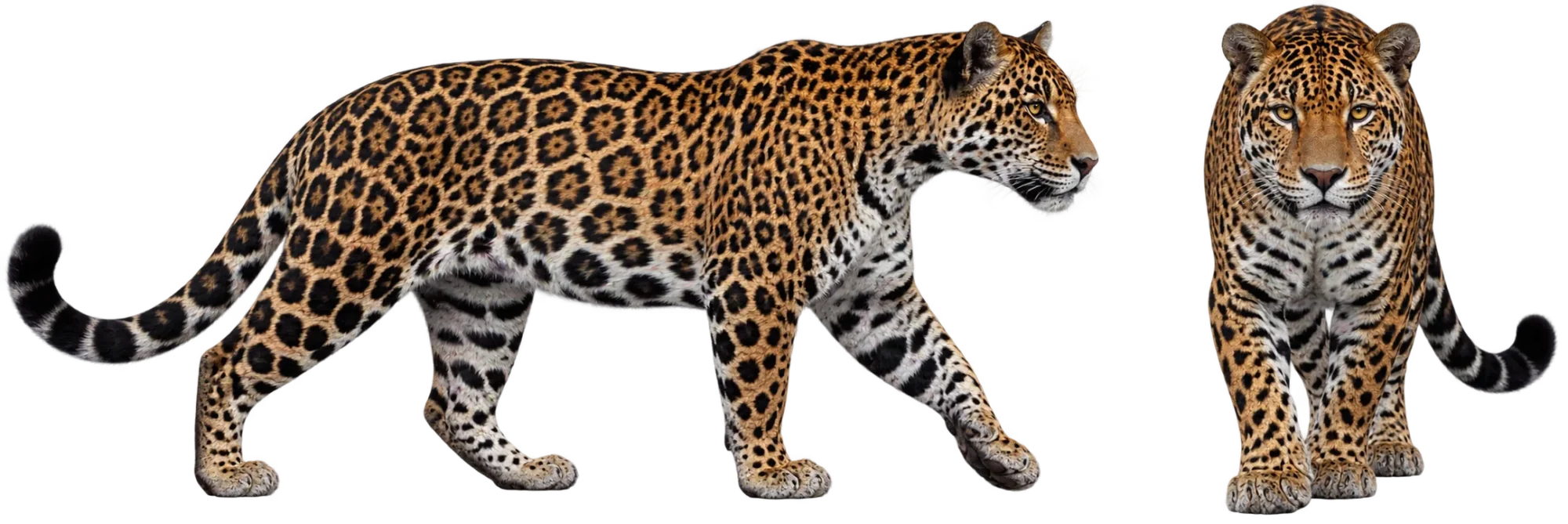
A jaguar’s reproductive schedule is shaped less by pregnancy than by the long period after birth. In a long-running wild study from Brazil’s Pantanal, cubs remained with their mothers for roughly a year and a half, while successful litters were usually separated by close to two years. For Panthera onca, maternal care occupies far more of the reproductive cycle than gestation itself.
Cub Rearing Sets the Pace of Reproduction
Jaguar gestation is generally reported at 91 to 111 days. Birth is only the start of a much longer investment. Cubs depend on their mother for food, protection, hunting experience, and access to her home range before they can live independently.
Mean age at independence in the Pantanal study
Mean interval between successful litters
Mean interval after unsuccessful litters
The difference between those litter intervals shows how strongly cub rearing can affect the next reproductive attempt. A female that raises at least one cub to independence may spend much longer between births than a female whose litter is lost. These figures describe one well-studied wild population rather than a fixed timetable for every jaguar across the species’ range.
Field Litters Can Be Smaller Than the Usual Reference Value
Species databases often give two cubs as a representative litter size, while reproductive reviews report a broader range of one to four cubs. Long-term field observations in the Pantanal produced a different picture: the mean litter size was 1.43 cubs, and single-cub litters made up 65.7% of recorded births used in the study.
2 cubs
A commonly used species-level average
1.43 cubs
Mean from 35 litters in one wild population
The two values serve different purposes. A species-level average combines information from broader records, while a field study measures what happened in a particular population during a defined period. The Pantanal results show why “two cubs” should not be read as the expected outcome of every jaguar birth.
Sexual Maturity and First Birth Are Separate Milestones
Hormone monitoring of captive females found puberty by about 22 months. In the Pantanal population, however, the mean age at first observed birth was 31.8 months, with recorded first births ranging from 25 to 37 months.
These measurements are not interchangeable. Sexual maturity describes the development of reproductive capacity. First parturition records when a female actually produces a litter, which necessarily comes later and also reflects the circumstances in which mating, conception, pregnancy, and birth occur. A maturity value therefore should not be presented as the age when a wild female normally becomes a mother.
Birth Timing Reflects Local Rainfall Patterns
Jaguar reproduction is not locked to one breeding season across the species’ range. A review of reproductive studies found only limited seasonal change in many measured traits, while also noting that local rainfall can influence reproductive timing.
The Pantanal study recorded two birth peaks, in April–May and October–November. Those periods fall near the end and the beginning of the wet season in that region. The pattern is useful evidence of local timing, but it should not be turned into a universal jaguar birth calendar for populations living under different rainfall cycles.
Independence Marks a Different Path for Sons and Daughters
Young jaguars in the Pantanal became independent at a mean age of 17.6 months. What followed differed sharply by sex. All 27 males that reached independence left their natal home range, while 21 of 33 females remained in areas adjacent to their mothers.
This sex-biased dispersal adds another stage to the jaguar life-history sequence. Independence is not simply the end of maternal association. For young males it commonly begins movement away from the natal area, while many daughters establish themselves closer to where they were raised.
 BobcatLynx rufus
 CheetahAcinonyx jubatus
 Eurasian lynxLynx lynx
 TigerPanthera tigris