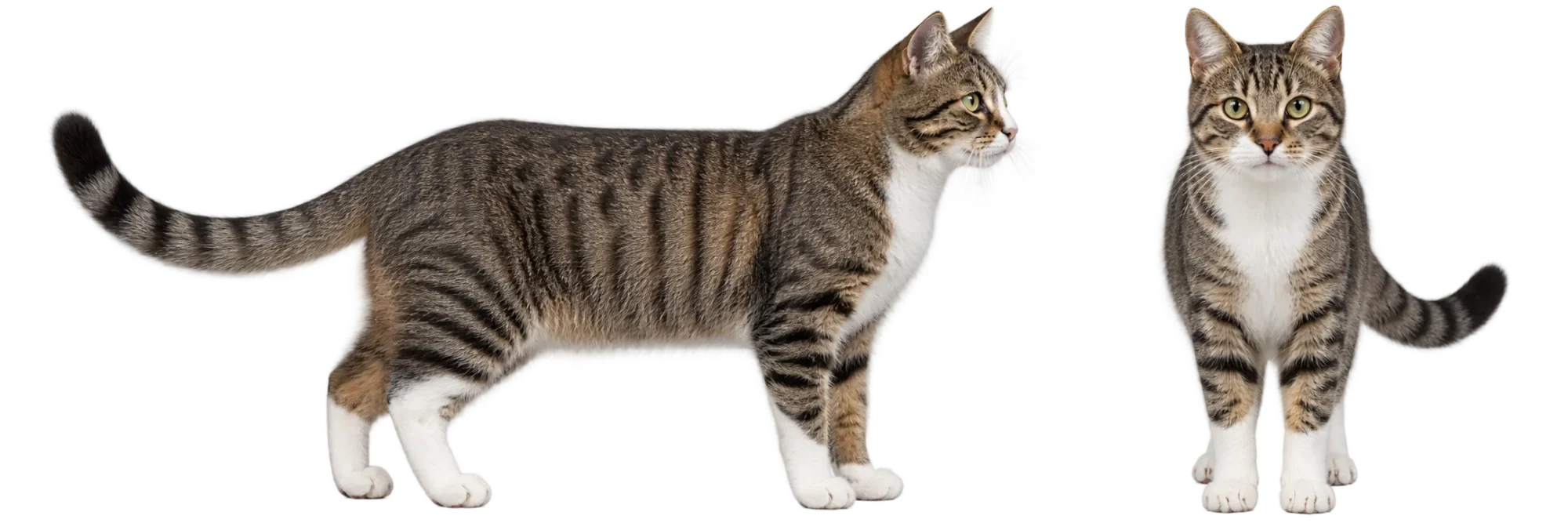
Domestic cats (Felis catus) can move from birth to reproductive age within their first year, but they begin life as highly dependent kittens. Their reproductive timing is unusually flexible: day length affects ovarian cycling, mating often triggers ovulation, and indoor lighting can extend reproductive activity beyond the season expected under natural daylight.
Day Length Reshapes the Domestic Cat Breeding Calendar
Female cats, or queens, are seasonally polyestrous. Under natural conditions, reproductive cycling becomes more active as days lengthen. Merck Veterinary Manual describes light as a major control of the cycle, with natural breeding activity concentrated in the brighter part of the year.
This seasonal pattern becomes less clear in indoor cats. Artificial lighting can expose a queen to long-day conditions for much of the year, allowing heat periods to occur more often than they would under natural daylight. Research on feline photoperiod also supports the close link between light exposure and reproductive cycling.
If pregnancy does not occur, another estrous cycle may follow within a few weeks. This repeated cycling helps explain how an unneutered female can have several opportunities to conceive during one breeding season rather than relying on a single annual mating period.
Mating Often Sets Ovulation in Motion
Domestic cats are commonly described as induced ovulators. Repeated mating can trigger the hormonal release that leads to ovulation. More recent reviews also note that spontaneous ovulation can occur, so induced ovulation should be treated as the usual pattern rather than an absolute rule for every queen.
A receptive queen may mate several times during one estrus and may accept more than one male. That creates the possibility of superfecundation: kittens within the same litter can have different fathers because separate eggs were fertilized by sperm from different males during the same reproductive cycle.
Multiple paternity within one litter is biologically plausible and documented in domestic cats. It should not be confused with superfetation, the conception of a new litter during an existing pregnancy; true superfetation has not been firmly demonstrated in this species.
Two Months of Pregnancy Lead to Rapid Kitten Development
Normal feline pregnancy lasts close to 65 days. Veterinary studies report some variation around that figure, and a 2022 review found that most births occur between about 61 and 70 days. Litter size also varies, although studies of breeding populations commonly place the average near four kittens.
Birth begins a very dependent stage. Domestic cats are altricial mammals: newborn kittens cannot regulate many body functions as adults do and depend on maternal warmth, milk, grooming and stimulation. Their development then changes quickly over the following weeks.
Puberty Can Arrive Before Full Body Growth
The age of puberty in domestic cats has a broad range. Veterinary reference data place female puberty from roughly 4 to 18 months and male puberty from about 7 to 18 months. Other comparative work places many domestic cats within roughly the 5–12 month range. Breed, body condition, season and light exposure can shift the timing.
Physical growth continues after some cats become reproductively capable. Kittens may already have reached much of their eventual body mass by six months, while full growth commonly extends toward 10–12 months. Sexual maturity therefore should not be treated as the same milestone as completion of body growth.
This early reproductive ability, combined with repeated estrous cycles and a pregnancy lasting only about two months, gives intact domestic cats the biological capacity for more than one litter in a year when conditions allow. Studies of managed breeding populations have reported averages of roughly two to two-and-a-half litters per year, although individual reproductive histories vary widely.
Longevity Numbers Change With the Population Studied
A maximum-age record and an expected lifespan answer different questions. An exceptionally old domestic cat shows what may be biologically possible under favorable circumstances; it does not describe how long a typical cat in a defined population is expected to live.
A 2024 VetCompass life-table study used 7,936 confirmed deaths from cats receiving primary veterinary care in the United Kingdom. It estimated life expectancy at birth at 11.74 years for that study population. Female cats were estimated at 12.51 years and males at 11.18 years.
The same research found differences associated with sex, neuter status, breed status and body-weight patterns. The authors also noted that life-expectancy figures from the UK, United States, Japan and other datasets do not match exactly because study design, breed composition, veterinary access, living conditions and other population features differ. A domestic-cat lifespan value is therefore most informative when its population and measurement method are kept attached to it.
 CheetahAcinonyx jubatus
 BobcatLynx rufus
 TigerPanthera tigris
 LionPanthera leo