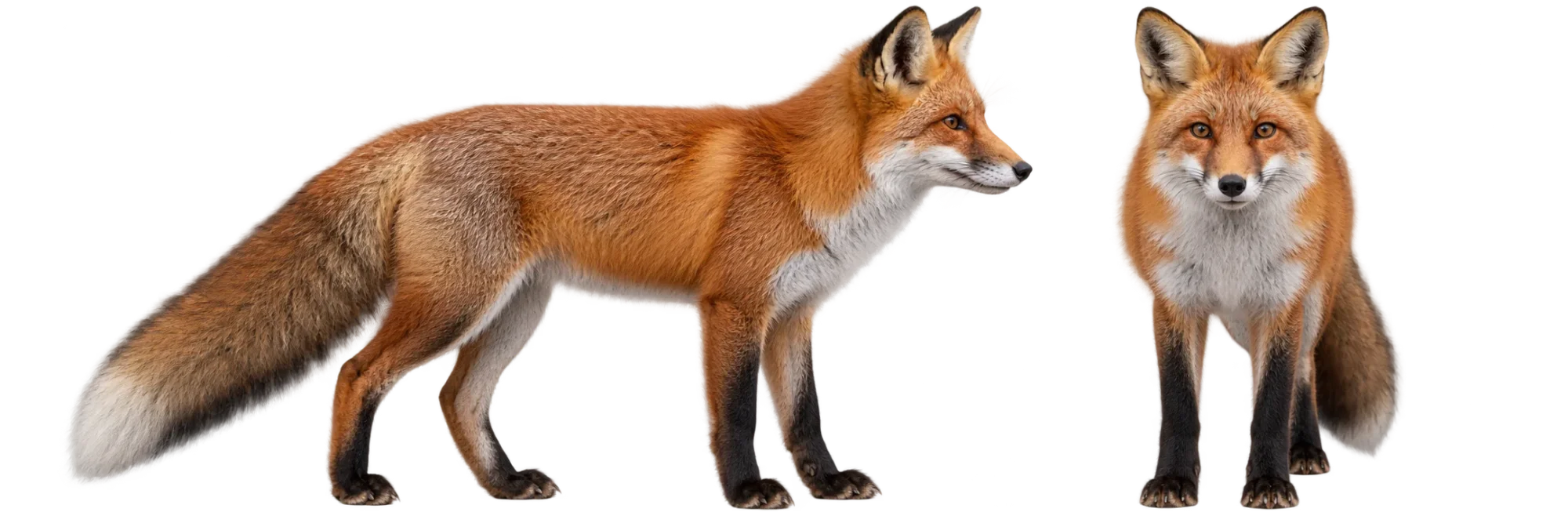
The red fox (Vulpes vulpes) fits reproduction, rapid cub growth, and the move toward independence into a strongly seasonal annual cycle. The exact calendar changes across its wide geographic range, but the sequence is consistent: a short breeding period is followed by about seven and a half weeks of gestation, several months of intensive parental care, and a first autumn in which many young foxes begin living apart from their natal family.
Winter Timing Sets the Red Fox Reproductive Cycle
Female red foxes have one main reproductive season each year. In temperate parts of the Northern Hemisphere, mating is concentrated in winter, while populations farther north tend to breed later than those at lower latitudes. This geographic shift matters because there is no single breeding month that describes the species everywhere.
Once conception occurs, gestation lasts about 51–53 days. Births therefore follow local mating dates fairly closely, placing the early nursing period in spring for many northern populations. A litter often contains about four or five cubs, although litter size varies among females and populations.
The breeding unit is also more flexible than a simple permanent pair. Red foxes may live as a male-female pair, while some populations contain social groups with additional adult females. Non-breeding relatives can remain with a group and may help provision cubs. During the earliest weeks, the mother provides direct care in and around the den, while the male commonly brings food to her and later to the growing litter.
Cubs Move Through the Den-Dependent Stage Quickly
Red fox cubs begin life in a highly dependent state. They are born with their eyes closed and cannot regulate body temperature as effectively as older cubs, making close contact with the mother and littermates especially important during the first weeks.
Their sensory and physical development then progresses rapidly. The eyes usually open at roughly 9–14 days, and walking becomes more coordinated during the following weeks. Cubs begin appearing outside the den at about four to five weeks of age.
Leaving the den does not mark immediate independence. Solid food is introduced while nursing is still continuing, and adults bring food back to the young as their teeth, movement, and feeding skills develop. Weaning is usually completed by about 8–10 weeks.
By this stage the cubs are spending more time above ground and ranging farther from the den. Their dependence on adults declines gradually rather than ending on a single date. Parents may continue supplying food for months, while the juveniles gain experience finding food on their own. Body growth is fast enough that young foxes can approach adult size at around six to seven months.
The First Autumn Can Split a Red Fox Family in Different Ways
Young foxes commonly remain associated with their natal area through summer. By September and October in many temperate populations, dispersal becomes more common as juveniles begin establishing independent ranges or moving through unfamiliar areas.
This transition is not identical for every fox. Males often disperse more readily or farther in many studied populations, while some females remain near their natal territory. Long-term work on socially living red foxes has also shown that family relationships and the social position of resident females can affect whether young animals stay or leave.
That variation helps explain why sexual maturity and actual breeding should not be treated as the same milestone. Red foxes can reach sexual maturity at roughly 9–10 months, placing many juveniles within reproductive age by the next breeding season. Yet a physically mature yearling does not automatically reproduce. Access to mates, social position, local density, and whether an animal has dispersed can all affect its first opportunity to breed.
Some offspring remain with their family beyond the usual dispersal period. In social groups, retained young may help carry food to later litters, while others eventually leave and establish a range elsewhere. The juvenile-to-adult transition is therefore partly developmental and partly social.
Record Longevity Is Far Longer Than Most Wild Lives
Red fox longevity data need context because the longest recorded life and the lifespan commonly achieved in the wild describe different things. Captive records show that the species has the biological capacity to survive for well over a decade under protected conditions, including a reported individual that exceeded 20 years.
Wild foxes usually face a much shorter life. Mortality during juvenile movement, disease, competition, accidents, and other environmental pressures remove many animals long before they approach their physiological limit. Published wildlife accounts often place the lives of wild red foxes in the range of only a few years.
This gap also changes how reproductive timing is interpreted. Reaching maturity before the end of the first year gives a fox the possibility of breeding early in life, even though some individuals delay or never obtain a breeding position. For a species in which many wild individuals die young, early maturity and an annual reproductive cycle allow reproduction to begin without requiring a long period of adult growth.
 African wild dogLycaon pictus
 DholeCuon alpinus
 Gray wolfCanis lupus
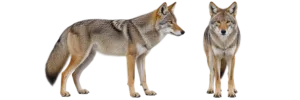 CoyoteCanis latrans