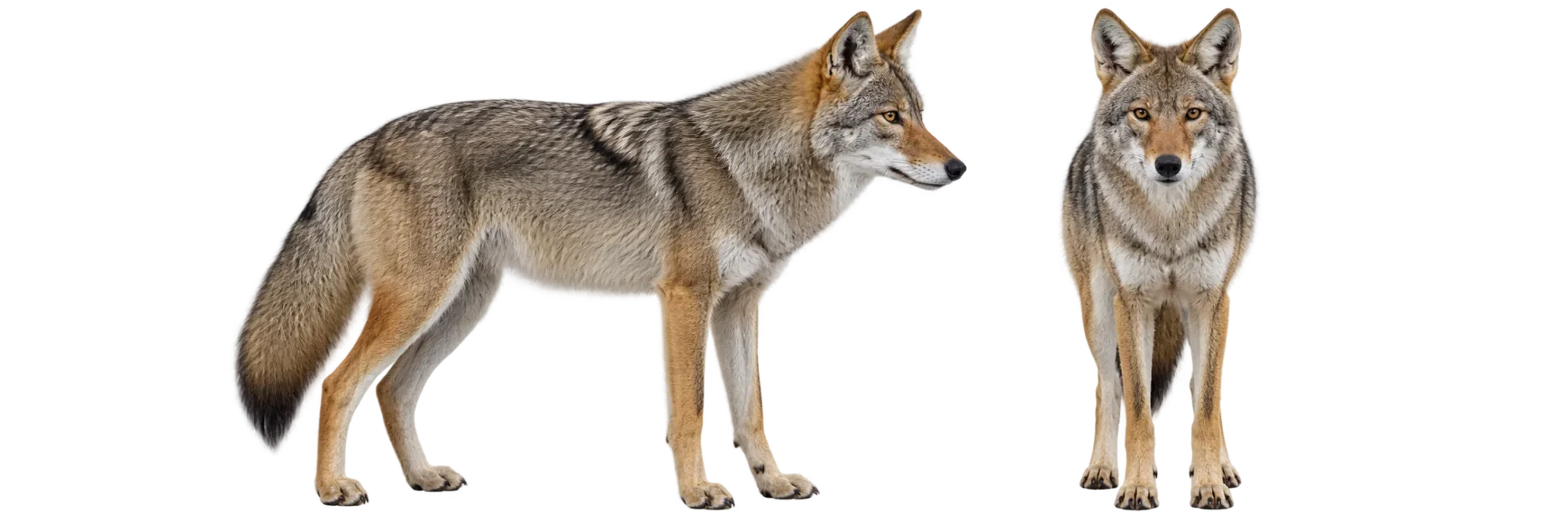
A coyote’s reproductive year is tightly seasonal, while the number of young entering a population can be surprisingly flexible. Canis latrans combines an annual breeding window with durable pair bonds, shared pup care and reproductive output that can shift with food supply and local population conditions.
One Annual Cycle Sets the Reproductive Calendar
Female coyotes are seasonally monestrous, meaning they normally have one estrous cycle each year. Across much of North America, mating is concentrated between January and March, although local timing can move with latitude and climate.
Pregnancy lasts about 60–63 days, placing most births in spring. This produces a narrow yearly opportunity for reproduction rather than repeated litters throughout the year. Males also show seasonal reproductive changes, so the timing of fertility in both sexes follows the same winter breeding period.
Young coyotes can become physiologically capable of reproduction during their first year, but capability and actual breeding are different. Some yearling females produce litters, while others do not breed until later. Studies of wild populations have found large differences in the proportion of yearlings that reproduce from one place or year to another.
That variation makes age alone a poor predictor of reproductive contribution. Access to food, social position, population density and the presence of an established breeding pair can all influence whether a young coyote actually raises pups.
Pair Bonds Continue Through the Pup-Rearing Season
Coyotes are best described as socially monogamous. An established male and female may remain paired for several years, sharing a territory as well as reproductive duties. The relationship therefore extends well beyond the short period when mating occurs.
Observations of breeding pairs show courtship building before estrus through close contact, play, scent investigation and mate guarding. Sexual activity then becomes concentrated around ovulation. Once that brief reproductive period ends, the pair continues to interact and maintain its territory.
The male’s role becomes especially visible during pregnancy and pup rearing. Females carry and nurse the litter, while males provide food and later help feed the pups directly. Older offspring that remain with the family may also assist with the new litter.
Coyote reproduction depends on more than conception. A stable pair can defend a territory, supply food and protect young during the weeks when pups are unable to forage independently. Additional family members may add another source of care.
Reproductive Output Can Change With Local Conditions
A litter of roughly five or six pups is common, but coyote litter size is not fixed. Field studies have recorded larger average litters when prey is abundant and smaller averages when food is less available. Population density has also been associated with differences in litter size.
Controlled research supports a direct nutritional link. When adult female coyotes experienced different levels of food intake before conception, researchers found changes in the average number of implantation sites and pups born. Conditions before mating can therefore affect reproductive output months later.
The same flexibility appears in the number of females that breed. Adult females usually contribute more consistently than yearlings, while reproduction among younger females can vary widely between populations and years.
This combination gives coyote populations more than one way to change reproductive output. Variation can occur through how many females breed as well as how many pups a breeding female produces. A litter-size value from one study or population should therefore be treated as a measurement from that setting rather than a universal number for the species.
Pup Development Leads Into Two Different Juvenile Paths
Newborn coyotes are highly dependent on adults. Their eyes are closed at birth, and the den provides shelter during their earliest development. Pups usually begin appearing outside the den after roughly two to three weeks and start taking solid food while still receiving intensive parental care.
Weaning generally occurs over the following several weeks, but independence is a longer process. Adults continue supplying food, guarding young and providing the social setting in which juveniles develop normal foraging and territorial behavior.
By autumn and winter, many juveniles begin leaving their natal area. Dispersal commonly starts around six to nine months of age, although timing varies and some young coyotes remain with their family into the following year.
Those choices create two broad life-history routes. A dispersing animal may travel through unfamiliar areas before obtaining a territory and breeding opportunity. A juvenile that stays can remain within the family group, sometimes helping raise a later litter before eventually dispersing or gaining a different social role.
Research on resident coyotes has found that dispersal is influenced by social position and access to resources rather than occurring at one mandatory age. Lower-ranking individuals may be more likely to leave, while remaining with the natal family can be useful when local conditions support continued group membership.
 African wild dogLycaon pictus
 Gray wolfCanis lupus
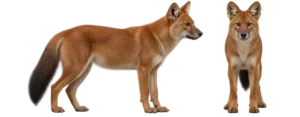 DholeCuon alpinus
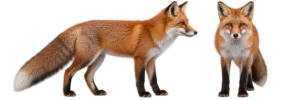 Red foxVulpes vulpes