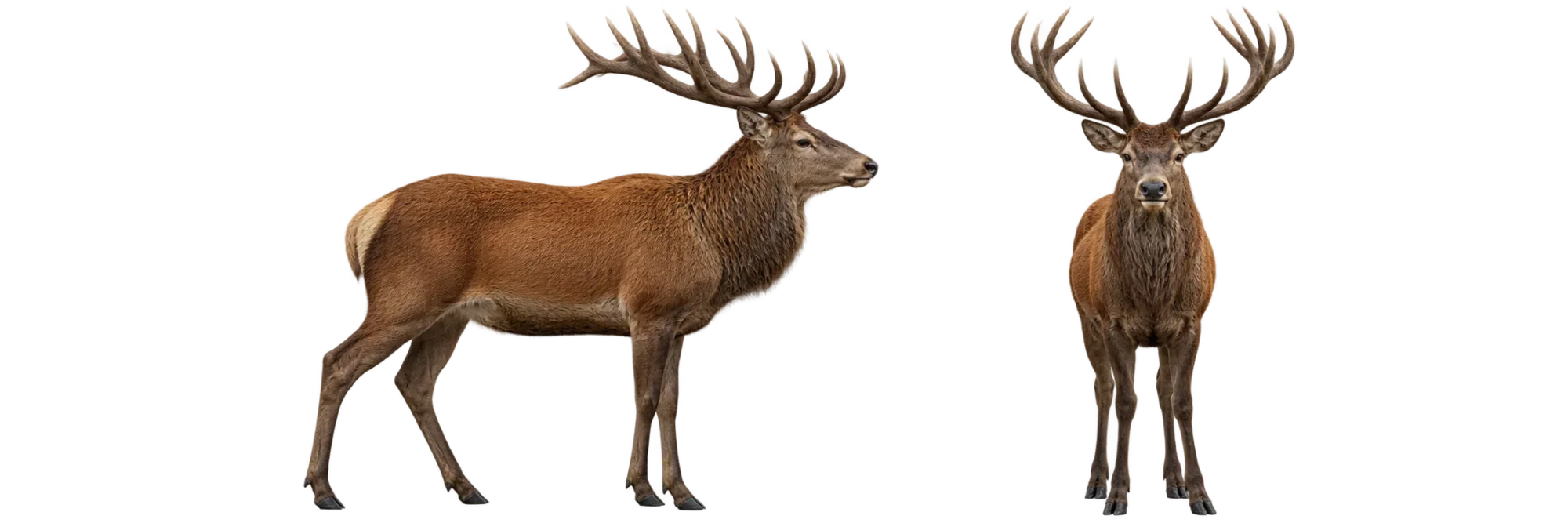
Red deer reproduction is tied to a narrow seasonal window, and the condition of the animal helps determine how that season translates into conception, birth and later breeding success. Here, red deer refers to Cervus elaphus in current mammal taxonomy. Some older literature used the same scientific name more broadly for deer now treated as separate species, so life-history measurements are most useful when the population and study context are kept with the value.
When Reproduction Begins
Female red deer can enter reproduction relatively early for a large deer, but age alone does not set the starting point. A hind in good condition may reach puberty during her second year of life. Studies of yearling hinds also show a clear connection between body development and the chance of conceiving: heavier and taller young females are more likely to reproduce than poorly developed animals of the same age.
This creates an important distinction between possible maturity and the age at which reproduction actually begins in a population. Food availability, population density, growth and previous development can shift the proportion of young females that breed. Long-term work on wild red deer has found that changes in body mass can be accompanied by changes in the proportion of females maturing as yearlings.
For males, physiological maturity is only part of the reproductive schedule. Red deer have a strongly competitive mating system. During the rut, breeding access is unevenly distributed among stags, and field studies have linked male reproductive success to dominance, the number of females held during the rut and how long a stag maintains breeding access. A male can therefore be capable of reproduction before he becomes successful at securing matings.
Conception and Gestation Timing
In northern temperate populations, most mating is concentrated in autumn. This seasonal timing places births in the following spring or early summer, when conditions for a new calf are generally more favorable. The reproductive calendar is tightly organized, but gestation itself shows measurable flexibility.
Studies that recorded both conception and calving dates found a repeated pattern: hinds conceiving earlier tended to carry their calves for longer, while later conceptions were followed by shorter pregnancies. Experiments in which conception dates were controlled produced the same relationship.
A single gestation figure should be read as an estimate for a population or dataset rather than an exact countdown for every pregnancy. Published red deer measurements span different herds, genetic backgrounds and management conditions, and conception date itself can shift gestation length by several days.
This adjustment narrows some of the difference in expected birth dates. Moving conception forward by a given number of days does not necessarily move calving forward by the same number. In one controlled study, groups bred progressively later had progressively shorter mean gestations, while calf birth weight remained similar among the groups.
The biology is useful when comparing trait records. Two credible sources can report different mean gestation lengths without either describing a different reproductive system. Study population, conception timing and the way gestation was measured all matter.
The Calf’s Hiding Phase
Red deer usually produce one calf per pregnancy. Twins can occur, but they are uncommon under natural reproductive conditions. Maternal investment is therefore concentrated mainly in a single young animal rather than divided among a large litter.
The first hours after birth involve a rapid transition. In observations of free-ranging tame red deer, calves first suckled on average about half an hour after birth and stood roughly three-quarters of an hour after birth. Individual calves varied widely, so these measurements describe study averages rather than fixed developmental deadlines.
Hiding is an active part of the neonatal strategy. Studies of red deer calves have found them using long vegetation, hollows, ditches and other available cover. Very young calves may remain still rather than flee when approached. Their early survival strategy therefore differs from that of young ungulates that begin following their mothers continuously soon after birth.
Maternal behavior changes at the same time. A hind can separate from the larger group around calving, return to nurse the concealed calf and later resume more regular association as the calf becomes capable of sustained movement. The transition from hidden neonate to mobile calf is one of the clearest developmental shifts in the red deer life cycle.
Reproductive Output Changes With Age
Red deer can survive for many years, but longevity and reproductive performance are separate measurements. A record lifespan does not describe the length of time during which an animal reproduces at the same rate.
Ageing studies of female red deer show this especially clearly. In one long-running group of hinds, the proportion successfully rearing a calf declined from 89% at six to seven years of age to 50% at 17 years. Reproductive performance then fell more sharply. Examination of very old females found depleted ovarian follicle reserves and reduced ovarian activity, linking the late-life decline to reproductive ageing rather than simply to chronological age.
The oldest recorded individuals should not be used to estimate how long a typical hind maintains peak reproductive output. Survival into advanced age can continue after fertility has begun to decline, and exceptional captive longevity records represent individual maxima rather than a normal reproductive lifespan.
Male ageing follows a different route because mating success depends heavily on competition. Long-term field data from wild red deer found that males holding larger harems during early adulthood later showed faster declines in harem size and in the amount of time spent rutting. The pattern links the energetic cost of intense early reproductive competition with the later decline of the same breeding traits.
Birth conditions can also leave effects that extend far beyond the calf stage. In the long-studied Rum population in Scotland, heavier birth weight was associated with greater lifetime reproductive success in males, while the same relationship was not found in females. Early growth, adult competition and reproductive ageing therefore interact differently in the two sexes across the red deer’s life.
 Caribou, or ReindeerRangifer tarandus
 White-tailed deerOdocoileus virginianus
 MooseAlces alces