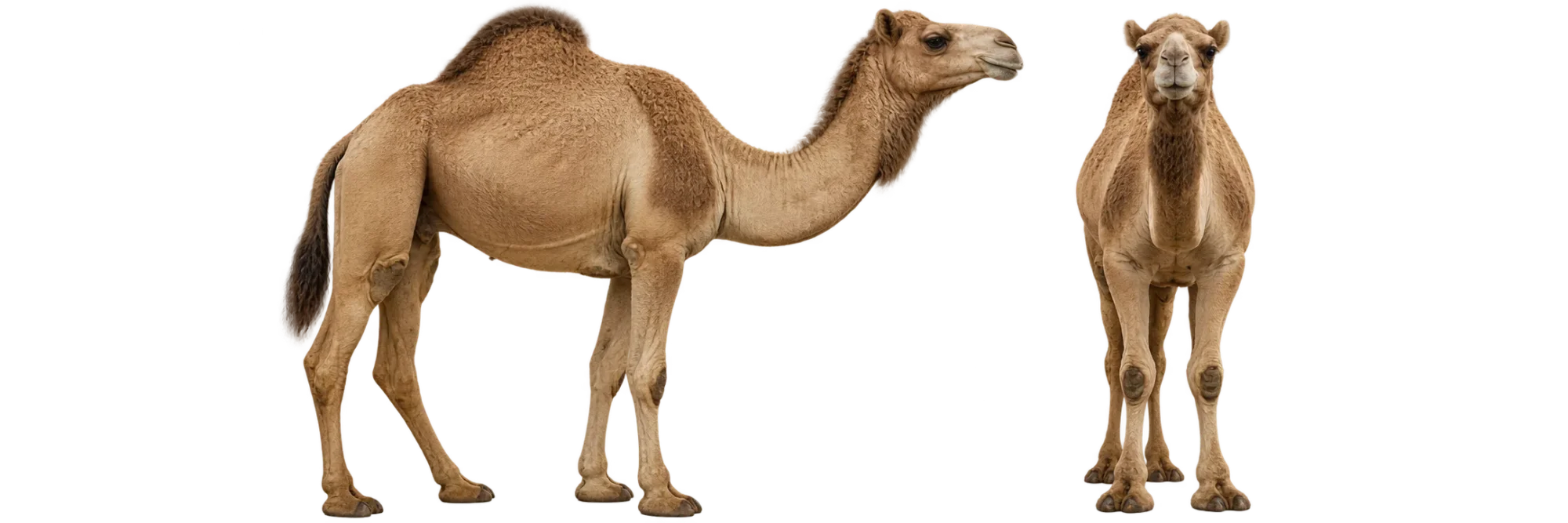
The dromedary, Camelus dromedarius, has a reproductive schedule built around a long pregnancy, usually one calf at a time, and extended maternal care. Its timing is also unusually flexible across climates: breeding can be strongly seasonal in some populations while becoming less restricted closer to the tropics.
Breeding Timing Changes With Climate and Condition
Dromedaries are commonly described as seasonal breeders, but the season is not fixed across the species’ range. In many Northern Hemisphere populations, mating activity rises during the cooler, shorter-day part of the year. Farther south, especially in tropical environments, reproduction may be spread across more of the year.
Food supply and body condition can alter this pattern. Females in poor condition may show delayed ovarian activity even when the usual breeding period has begun. This makes reproductive timing partly a response to local conditions rather than a simple calendar event.
Dromedary females are induced ovulators. Ovulation normally occurs in response to mating rather than on a continuously repeating ovulatory cycle of the kind seen in many other domestic mammals. Follicles can develop without an ovulation taking place, so the presence of ovarian activity does not by itself mean that conception is imminent.
Females can become reproductively mature while still relatively young, but actual first breeding often occurs later. Males also show a long transition into full reproductive performance. Young males may display rutting behavior before reaching the reproductive capacity typical of mature adults.
A Pregnancy Occupies Most of a Year and Then Some
Dromedary gestation lasts roughly 12 to 13 months, with reported values varying among animals and populations. That long pregnancy immediately limits how rapidly a female can produce successive calves.
Pregnancy in this species also has an unusual anatomical pattern. Although ovulation can originate from either ovary, the developing pregnancy is found almost exclusively in the left uterine horn. Large examinations of pregnant reproductive tracts have placed well over 99% of pregnancies on the left side.
Multiple ovulations can occur, yet twin births are rare. A single calf is the usual reproductive investment, so each successful pregnancy represents a large share of a female’s reproductive effort for that period.
Mobility Comes Early, Independence Does Not
A newborn dromedary is relatively well developed. Calves can stand and move soon after birth and may be moving freely by the end of their first day. Early mobility is therefore very different from the much longer process of becoming nutritionally independent.
The mother provides prolonged care through nursing. Reported maternal care and lactation commonly extend for many months and can continue beyond a year. Under managed conditions, weaning practices vary, and studies have examined ages such as eight months or around 12 months rather than identifying one natural age that applies to every population.
Standing and walking develop quickly, allowing the calf to remain close to its mother rather than remaining helpless at a birth site.
Milk remains important well beyond the neonatal period, while the calf gradually increases its use of other foods and continues growing.
Mother-calf contact is especially active immediately after birth. Behavioral studies have recorded frequent sniffing and vocal contact during the first days, with these interactions declining as the initial bond becomes established.
Several Delays Separate One Calf From the Next
A dromedary cannot be assigned a single universal calving interval simply from gestation length. Pregnancy already lasts more than a year, and the timing of the next conception may also be affected by lactation, nutritional state and the return of favorable breeding conditions.
Intervals near two years are commonly reported, but they should be understood as a reproductive pattern rather than an automatic biological deadline. A female that calves near the end of a local breeding period may not conceive again immediately. In populations with strong seasonality, missing that window can lengthen the interval considerably.
Nutrition adds another layer. Lactation places continuing demands on the mother, and poor body condition can delay the return to effective reproductive activity. The result is a life-history strategy centered on relatively few, heavily supported offspring rather than rapid production of repeated litters.
 Bactrian camelCamelus bactrianus
 LlamaLama glama