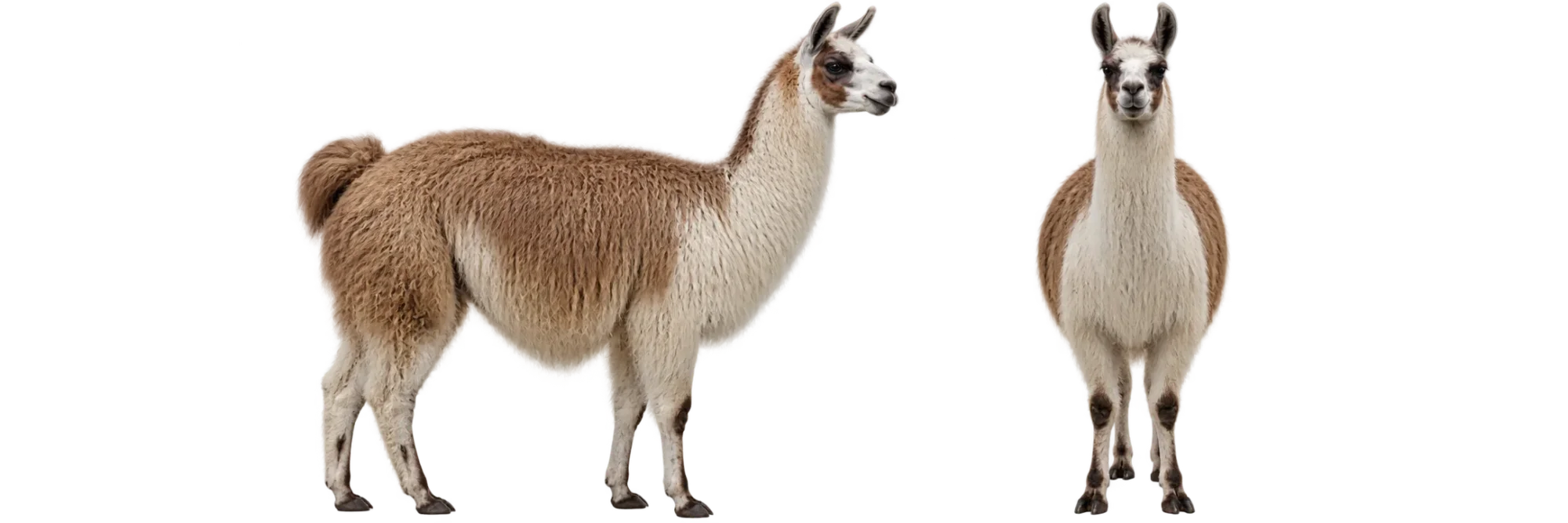
Llamas (Lama glama) are domestic South American camelids, so much of their life-history evidence comes from managed animals rather than a free-ranging wild population. Their reproductive biology has a distinctive starting point as well: females are induced ovulators, with mating and a semen-borne biological signal helping initiate ovulation.
How Ovulation Is Triggered
Female llamas develop follicles in repeating waves rather than depending on the kind of regular ovulatory cycle seen in many familiar livestock species. Once ovarian activity has begun, a dominant follicle may develop roughly every 12–14 days, but the presence of a mature follicle does not by itself mean that ovulation will occur.
Mating normally provides the trigger. Research on South American camelids has shown that llama seminal plasma contains an ovulation-inducing factor identified as beta-nerve growth factor (β-NGF). This molecule promotes the hormonal events that lead to ovulation. Physical stimulation during mating may contribute to the reproductive response, but the chemical signal carried in seminal plasma is a central part of the mechanism.
Ovulation commonly follows about 24–30 hours after mating. A functional corpus luteum then develops and produces progesterone, supporting pregnancy if conception has occurred.
This reproductive system gives the female a series of opportunities for conception while follicles are developing. It also explains why calendar-based descriptions of an ordinary estrous cycle can be misleading when applied to llamas.
One Cria After a Long Pregnancy
A successful llama pregnancy lasts close to eleven months. Veterinary guidance places the normal gestation range at about 332–352 days, with variation among individual pregnancies.
The usual reproductive outcome is a single cria. Live twins are extremely uncommon. Twin conceptions can occur, but many twin pregnancies are lost before both offspring reach birth.
Llama pregnancies also show a strong left-sided pattern inside the uterus. Ovulation can originate from either ovary, yet the great majority of established pregnancies are carried in the left uterine horn. This is a well-described feature of camelid reproduction rather than evidence that only the left ovary is functional.
Birth itself is usually much shorter than the months of fetal development that precede it. The active delivery stage commonly takes less than 30 minutes in an uncomplicated birth.
The Cria Becomes Mobile Within Minutes
A newborn llama enters a very different developmental phase almost immediately after birth. A normal cria commonly weighs around 9–15 kg, although individual birth weights vary with genetics, maternal condition and other factors.
Healthy newborns usually attempt to stand within 15–45 minutes. Nursing should begin soon afterward, often within the first hour. This rapid transition from birth to standing and feeding is an important part of early camelid development.
After the first day, healthy llama crias may gain roughly 250–500 g per day during early growth. Milk remains central during this period, but increasing independence develops gradually rather than at the moment the cria first begins moving confidently beside its mother.
Puberty Arrives Before Full Breeding Readiness
Female ovarian activity can begin at about 10–12 months, but puberty is not the same as the preferred age for breeding. Physical growth continues beyond the first reproductive hormonal changes.
For managed llamas, females are commonly held back from first breeding until they are at least about two years old and have reached adequate body size. Veterinary guidance often uses a body weight above approximately 90 kg as one consideration for a llama female. The distinction matters: an animal can show reproductive activity before its body has reached the stage normally preferred for pregnancy.
Male development follows another timetable. Androgen production can begin during the first year, yet normal anatomical development may prevent effective mating until roughly 18–24 months. Males often enter breeding use within that age range, while full fertility may develop later.
Puberty, the ability to mate, recommended breeding age and full reproductive maturity should not be treated as interchangeable measurements. Each describes a different point in development.
Female reproductive recovery after birth can also be relatively rapid. Under suitable conditions, some females can conceive again within about 14–21 days after delivery. That biological capacity does not mean every female follows the same interval; health, body condition and breeding management affect the actual schedule.
Recorded Longevity Comes Mainly From Managed Llamas
Lama glama is recognized as a domesticated species and is closely tied evolutionarily to the wild guanaco, Lama guanicoe. This domestic status affects how lifespan records should be interpreted. There is no equivalent modern wild llama population from which a normal free-ranging lifespan can simply be measured.
Curated longevity data include a captive llama recorded alive at 28.9 years. That figure is a maximum documented longevity record, not an expected lifespan for every llama. A record from one unusually old individual cannot be converted into a typical life expectancy.
Ageing llamas can develop changes familiar in other long-lived mammals, including dental wear, musculoskeletal decline and reduced vision or hearing. How long an individual remains healthy depends on husbandry, nutrition, disease history, genetics and access to veterinary care, making a single lifespan number less informative than the context behind it.
 DromedaryCamelus dromedarius
 Bactrian camelCamelus bactrianus