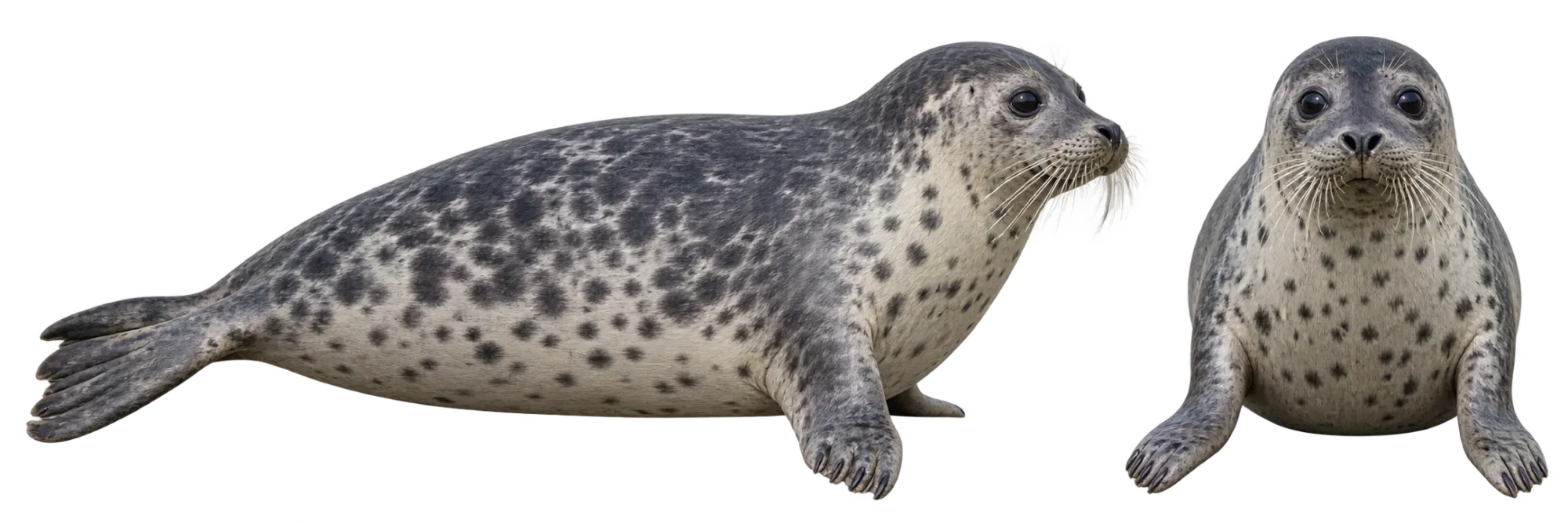
A harbor seal pup can enter the water within minutes of birth, yet many of the physiological traits that support adult diving are still developing. The first weeks of life compress nursing, rapid fat gain, swimming practice and the first steps toward independent feeding into a short period of maternal care.
Pups Enter the Water While Diving Capacity Is Still Developing
Harbor seal pups are unusually aquatic from the beginning. They can swim at birth and begin making short dives within their first days. Early swimming ability, however, should not be confused with adult diving performance.
Young pups have lower muscle myoglobin concentrations and smaller oxygen stores than adults. Research following pups through lactation has found that some measures of diving physiology continue developing after weaning. Mean dive duration also rises with age during the first months, even though very young pups already have enough breath-holding capacity for brief dives.
A newborn harbor seal does not need to finish physiological development before entering the water. Swimming begins first; longer and more effective diving develops through use, growth and post-weaning maturation.
This timing fits the pup’s early environment. Maternal care takes place around coastal haul-outs, but mother and pup regularly move between land and water. Aquatic activity is therefore part of normal development rather than a stage postponed until after nursing.
A Short Nursing Period Supports Rapid Body-Fat Gain
Harbor seals usually produce a single pup, and maternal investment is concentrated into a nursing period measured in weeks rather than months. The exact duration varies among populations and studies, with roughly three to five weeks common in wild populations.
The milk is extremely energy dense, commonly containing about 40–50% fat. Much of the pup’s early weight gain is stored as blubber, giving it an energy reserve that becomes especially useful when maternal milk is no longer available.
Harbor seal mothers use both stored body energy and food obtained during lactation. Studies at Sable Island found that females lost large amounts of body fat after giving birth, while their foraging effort rose later in the nursing period. This differs from the prolonged complete fasting seen in some larger true seals.
Field studies have found that heavier mothers can begin lactation with larger energy stores. Maternal condition and energy expenditure can affect pup growth and weaning mass, so the nursing period reflects the condition of both mother and pup rather than a fixed transfer of milk for a fixed number of days.
Feeding Independence Develops Across the Weaning Period
Weaning is often treated as the point when a pup switches from milk to prey, but observations of free-ranging harbor seals show a more gradual transition. Stomach-temperature monitoring has detected solid-food ingestion in some pups that were still nursing.
That does not mean young pups are already efficient hunters. Their diving physiology and underwater behaviour continue changing after maternal care ends. Research on pups from Sable Island also found a post-weaning period in which animals lost mass before regular independent feeding became established.
The pup therefore reaches several milestones on different schedules: it can swim almost immediately, may investigate or ingest prey while still nursing, loses access to milk within weeks, and continues improving its diving and foraging abilities afterward.
Delayed Implantation Separates Mating From Embryonic Growth
Female harbor seals normally mate after the nursing period. Fertilization is followed by embryonic diapause, a period during which implantation is delayed. Active placental development begins later, allowing reproduction to remain aligned with a seasonal annual cycle.
The delay is commonly around two to three months, followed by roughly eight months of development after implantation. Treating the entire interval as ordinary active gestation can therefore hide an important part of harbor seal reproductive biology.
Birth timing is not identical throughout the species’ broad range. Pupping dates vary geographically, and neighboring populations can differ in ways that latitude alone does not explain. Long-term work in the Wadden Sea also recorded births shifting earlier over several decades, with changes in the duration of embryonic diapause proposed as the most likely mechanism.
Reproductive Maturity Precedes the End of Physical Growth
Sexual maturity generally develops during the first several years of life rather than at one universal age. Females often mature earlier than males, and published values differ among populations. Studies from the North Atlantic, for example, have placed female maturity around four years in some populations and male maturity several years later.
Becoming reproductively mature does not mean every part of the body has reached its final dimensions. A 2026 study of eastern Atlantic harbor seals found rapid craniomandibular growth through the early years followed by slower continued growth after the age when sexual maturity is commonly reached.
This separation between reproductive and physical development helps explain why a single “adult age” is not very informative for harbor seals. Reproductive capability, body size, skull development and mature diving performance emerge on partly overlapping schedules rather than at one biological threshold.
 Southern elephant sealMirounga leonina