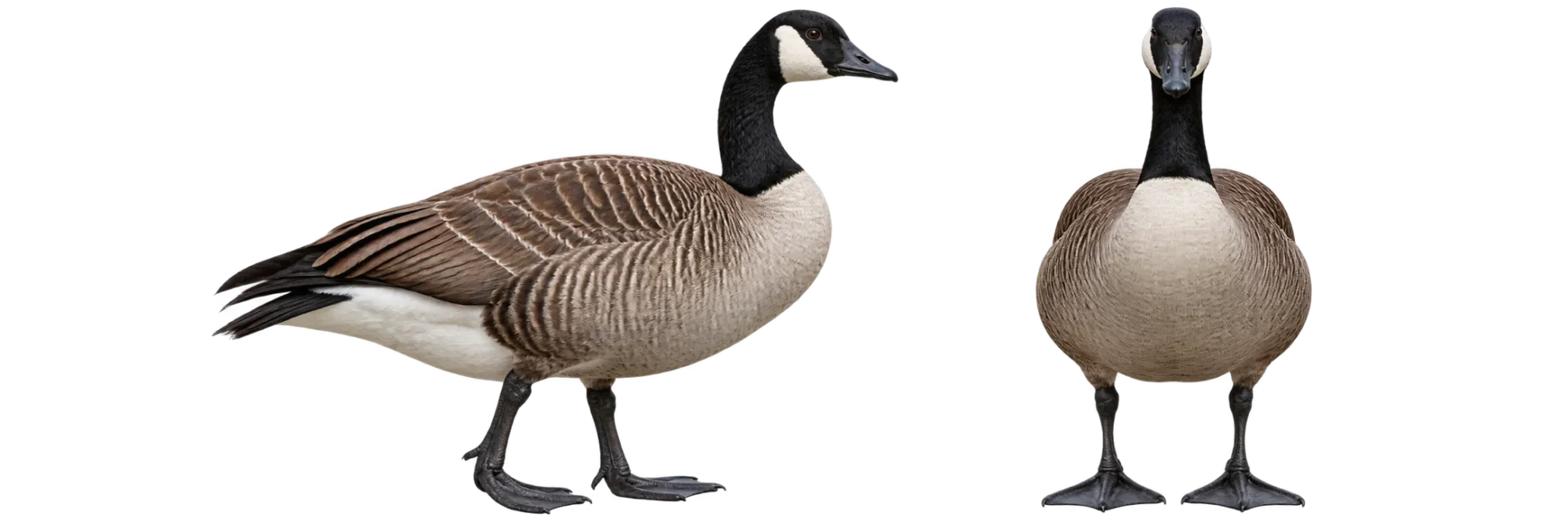
A Canada goose (Branta canadensis) gosling can walk, swim and feed soon after hatching, but its early independence is mostly physical. The young bird remains part of a closely guarded family unit for months, while its parents time nesting, brood care and their own annual molt around the short northern growing season.
Pairing Begins Before the First Successful Nest
Canada geese form long-lasting pair bonds, and established pairs commonly remain together from one year to the next. Pair formation does not mean that breeding starts immediately. Young birds may become reproductively mature before they regularly produce a successful nest, and many do not breed until they are around three years old or older.
Mate choice also shows an unusual size pattern. Canada geese tend to pair with birds of similar body size, a form of assortative mating. Because the species includes populations and subspecies with large differences in adult size, this helps keep the two members of a pair relatively well matched.
Once spring nesting begins, the pair divides its work clearly. The female chooses the nest site, builds the nest and performs the incubation. The male normally remains nearby and guards the nesting area.
Egg Laying Leads to a Closely Synchronized Hatch
The exact nesting calendar changes with latitude, local climate and whether a population is migratory or resident. In warmer parts of the range, nesting may begin while northern breeding areas are still frozen.
A Canada goose usually produces one brood in a successful breeding season. Around five eggs is common, although both smaller and larger clutches occur. Eggs are laid over several days rather than all at once.
Full incubation starts near the completion of the clutch. This timing keeps embryo development relatively synchronized, so the eggs can hatch within a narrow period instead of producing young separated widely in age.
The female incubates for roughly 25–28 days in many populations. If a nesting attempt fails early enough, a pair may nest again, but Canada geese do not normally raise repeated successful broods during the same season.
Goslings Leave the Nest Before They Can Fly
Canada goose young are precocial. They hatch covered in down, with open eyes and functional legs. Within about a day or two, the family can leave the nest and move toward feeding areas or water.
This early departure is very different from true independence. Goslings can pick up their own food, but their parents provide protection, guidance and access to suitable feeding and resting areas. The adults remain alert while the young spend much of their time feeding and growing.
A newly hatched gosling may walk and swim almost immediately. Fledging refers to the later development of functional flight. For Canada geese, these two stages are separated by several weeks.
Families sometimes combine with other Canada goose families to form larger groups of young, often called gang broods. These groups can contain several broods accompanied by multiple adults. The arrangement changes the social setting of development, but the young still spend their early weeks under adult protection.
First Flight Develops Alongside the Adults’ Summer Molt
Young Canada geese generally become capable of flight during the weeks after hatching rather than at one fixed age. Published figures vary by population and by how flight development is defined, with useful flight ability developing broadly within about six to ten weeks.
The adults undergo their own temporary loss of flight during this period. Like other waterfowl, Canada geese replace their main flight feathers together rather than changing them one at a time. An adult can therefore be flightless for several weeks while new wing feathers grow.
Breeding adults tend to molt while they are caring for their still-flightless young. By the time the goslings are approaching flight readiness, the parents are also regaining the ability to fly. This keeps the family together during a period when neither generation can simply escape danger by taking off.
The Family Unit Continues Long After Fledging
Flight does not immediately end parental association. Juvenile Canada geese often remain with their parents through autumn and winter, and family groups may travel, feed and migrate together.
Young birds can remain associated with their parents for much of their first year. Separation becomes more likely as the next breeding season approaches and established adults return to nesting behavior.
This extended family period makes the Canada goose life cycle different from that of birds whose young disperse shortly after fledging. A gosling begins feeding for itself almost immediately after hatch, yet social independence develops much more slowly. Walking, swimming, flight and separation from the parents are distinct stages rather than a single transition into adulthood.
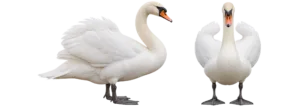 Mute swanCygnus olor
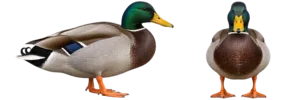 MallardAnas platyrhynchos