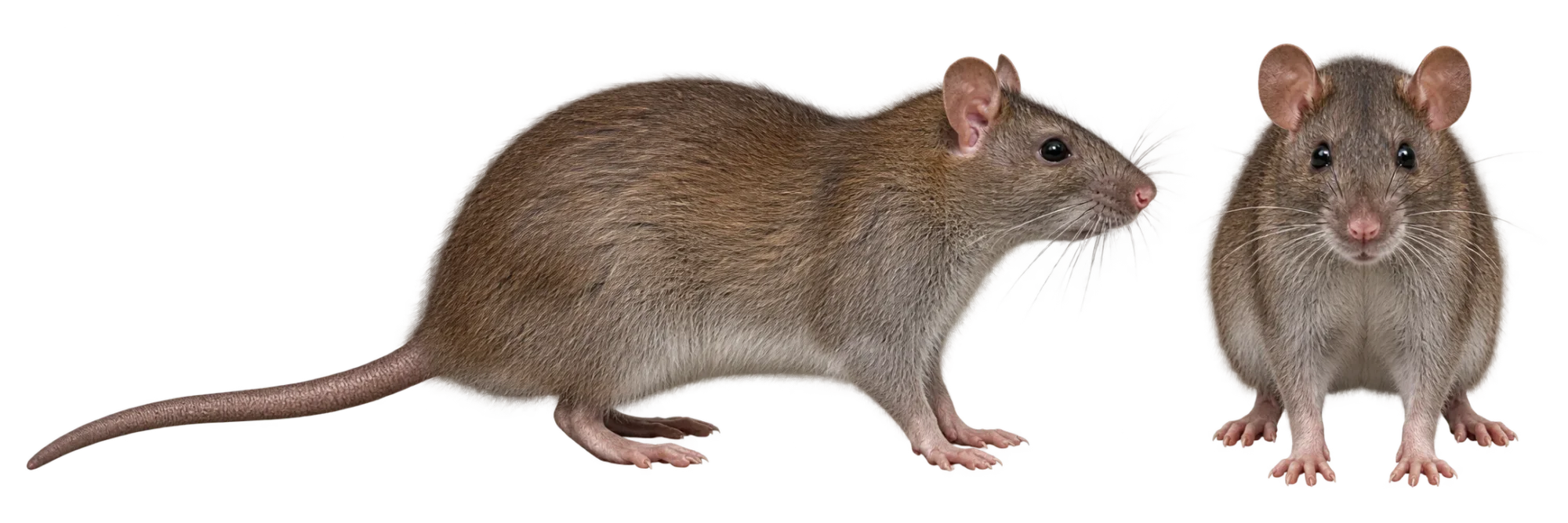
The Norway rat, Rattus norvegicus, can move through generations quickly, but its life history is more flexible than a single set of breeding numbers suggests. Reproductive timing changes with environment, wild rats differ from laboratory strains, and females can begin another pregnancy while still nursing an existing litter.
Breeding Timing Changes With Local Conditions
Norway rats have the capacity to reproduce through much of the year when conditions allow. That capacity does not produce the same breeding pattern in every population. Studies of wild rats have found differences associated with climate, season and local environmental conditions.
A two-year study of urban Norway rats in Salvador, Brazil, for example, found pregnant and lactating females across sampling periods without a clear seasonal difference in reproductive activity. Research on populations from different climatic regions has also found stronger reproductive seasonality in some Norway rats than in others. The species is better described as an opportunistic breeder whose reproductive schedule can respond to local conditions rather than as an animal with one fixed global breeding season.
Once reproduction is underway, the schedule can be fast. A typical gestation is about three weeks, commonly reported around 22–24 days. Females can return to a fertile estrus shortly after giving birth, making another conception possible while the current litter is still dependent on milk.
Mating can involve several males. Genetic work on free-living urban Norway rats in Baltimore found multiple paternity throughout the sampled litters, with offspring from a single litter sired by more than one male. This fits a reproductive system in which mating opportunities are distributed across several individuals rather than stable breeding pairs.
Postpartum Breeding Can Overlap Pregnancy and Lactation
The fertile period soon after birth creates an unusual scheduling problem for a female Norway rat. If conception occurs during postpartum estrus, she may be pregnant with one litter while nursing another. The two reproductive demands can continue at the same time for much of the next pregnancy.
Pregnancy length during this situation is more variable than the standard gestation figure suggests. Nursing can delay implantation of the newly conceived embryos. Experimental observations of postpartum-conceived pregnancies have recorded later births when implantation was delayed, including gestations extending beyond the usual three-week interval.
This delay changes when the energetic demands of pregnancy and lactation overlap. Studies of concurrently pregnant and lactating rats indicate that delayed implantation can spread those demands over a longer period rather than forcing late pregnancy to coincide as closely with intensive milk production.
The timing also affects the older litter. In observations where a second litter arrived relatively soon, older pups sometimes continued entering the nest and nursing after their younger siblings were born. When implantation delay pushed the second birth later, the first litter was more likely to have completed weaning before the newborn litter arrived.
For this reason, weaning, the next conception and the next birth are not always separate stages. Under rapid postpartum breeding, they can form an overlapping sequence in which a female is supporting offspring at two developmental stages.
Domestication Changes the Reproductive Schedule
Many detailed measurements for Rattus norvegicus come from laboratory rats. Those animals belong to the same species as wild Norway rats, but laboratory strains should not be treated as exact models of wild reproductive timing.
A direct comparison between captive-reared wild Norway rats and domestic Long–Evans and Sprague–Dawley rats found several differences. Wild females reached vaginal opening, first estrus and first conception later than the domestic females. Wild females also produced smaller litters under the study conditions.
The male pattern was more nuanced. The first appearance of sperm in the testes occurred at a similar age among the groups, while wild males were older when they first copulated. Reproductive maturity is therefore not one biological event that can always be represented by a single age. Physiological development and successful mating can occur on different schedules.
Domestic rats were also heavier at several reproductive stages examined in the comparison. Generations of breeding under controlled conditions have changed traits associated with development and reproduction. A maturity age or litter value reported for a laboratory strain can still describe that strain accurately, but it should not automatically be presented as the normal value for every free-living Norway rat.
Wild Survival and Captive Longevity Measure Different Outcomes
Longevity records for Norway rats are strongly affected by living conditions. Captive animals are protected from many sources of mortality faced by free-living rats, so the oldest laboratory animals can survive far longer than most individuals in wild populations.
Ageing databases based on recorded survival data place the most defensible maximum longevity for normally fed captive Norway rats at about 3.8 years. Longer values have occasionally been reported, but some are poorly verified or come from special experimental conditions. A female maintained under caloric restriction, for example, survived to about 4.6 years; that record does not describe an ordinary captive lifespan.
Wild Norway rats usually have much shorter lives. High mortality means many do not survive beyond their first year, although exceptional free-living individuals may live considerably longer. A population can therefore maintain rapid turnover even though the species is physiologically capable of surviving for several years.
This distinction matters when reading life-history data. Maximum longevity describes the upper observed boundary of survival, while wild lifespan reflects the mortality experienced by animals under natural or urban conditions. The two measurements describe different parts of the Norway rat’s biology and should remain separate.
 House mouseMus musculus