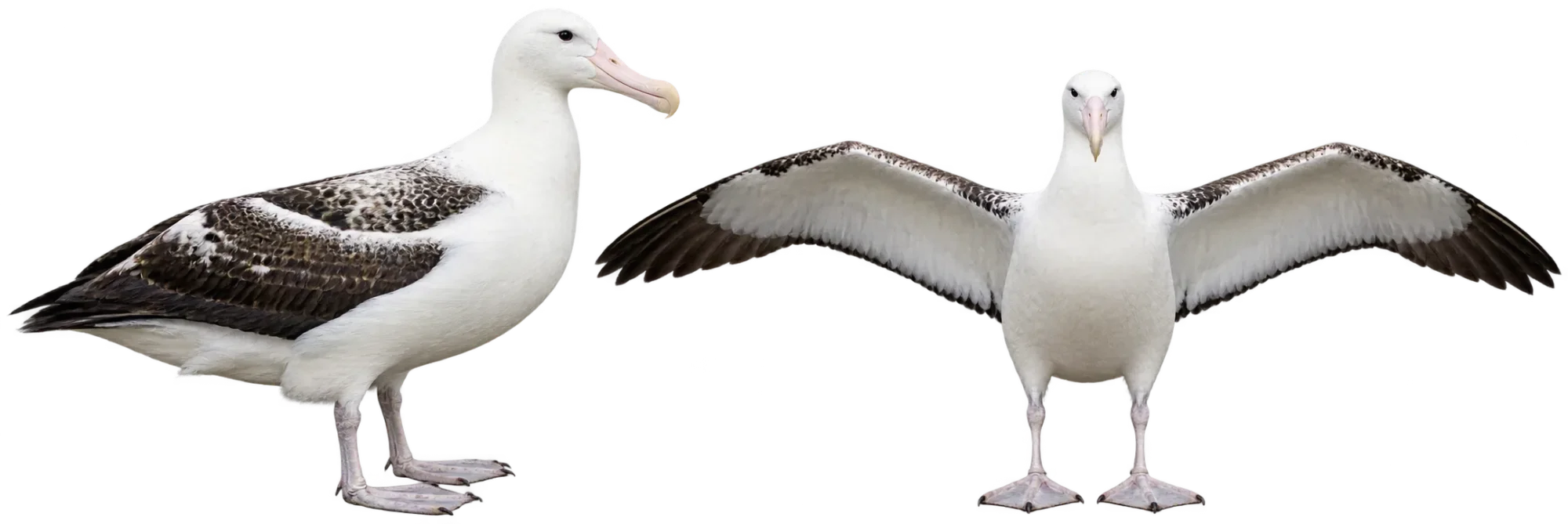
A wandering albatross (Diomedea exulans) can spend almost an entire year on a single nesting attempt. One egg, nearly three months of incubation and roughly nine months of chick rearing create a reproductive schedule in which successful adults usually cannot begin again the following season.
One Chick Can Occupy More Than a Year
Adults begin returning to breeding colonies during November. Egg laying is concentrated in December and January, and the female produces one egg rather than a multi-egg clutch. Incubation lasts about 78–79 days, with the parents taking turns on the nest.
Hatching is only the beginning of the larger time commitment. The chick then remains associated with the nest for around nine months. At well-studied colonies, fledging commonly occurs near the end of the year, roughly 270–280 days after hatching.
Because this sequence takes so long, the species is usually described as a quasi-biennial breeder. A successful pair normally skips the next breeding season. The pattern is not an absolute two-year clock: some birds delay even longer, while birds that lose an egg or chick early may be able to breed again sooner.
The Nestling Period Extends Through an Austral Winter
Wandering albatross chicks have one of the longest post-hatching development periods among birds. After an early brooding phase, the chick spends long periods alone while its parents forage at sea and return intermittently with food.
Growth does not consist simply of a steady rise toward adult mass. Studies at the Crozet Islands found that chicks can reach their highest body mass during development and then become lighter before departure. At the same time, the wings and outer flight feathers continue developing toward the form needed for sustained oceanic flight.
This creates an unusual developmental sequence: body growth is largely achieved before fledging, while final preparation for flight continues late into the nestling period. The chick also passes through winter while depending on widely spaced parental feeding visits.
There is no extended post-fledging feeding period. Once a young wandering albatross leaves the colony, it must forage independently at sea rather than continue receiving food from its parents.
Years at Sea Separate Fledging From First Reproduction
Leaving the nest does not lead quickly to breeding. Young wandering albatrosses disperse over the ocean and can remain away from their natal colony for several years. Some begin visiting colonies while still immature, well before they actually lay an egg or rear a chick.
Long-term studies therefore distinguish returning to a colony from first reproduction. Older summaries often place average first breeding at roughly 9–10 years of age, although individual birds can start earlier and some wait much longer.
The delay gives the juvenile phase a large share of the species’ life history. A bird may already have spent years flying and feeding independently before it joins the breeding population.
First Breeding Age Can Shift Between Generations
Research published in 2026 shows that age at first reproduction is not fixed at one species-wide value. A 35-year study of wandering albatrosses from the Crozet Islands found that recruitment age changed across birth cohorts and differed between the sexes.
| Group | Earlier Cohorts | Later Cohorts |
|---|---|---|
| Females | About 9.0 years | About 7.5 years |
| Males | About 10.2 years | About 9.2 years |
These values describe age at first reproduction in the studied Crozet population, not a universal maturity age for every wandering albatross population. The researchers found that conditions experienced around the natal period could leave delayed effects on later breeding probability. Availability of potential mates was also associated with earlier recruitment, while population density affected males differently from females.
The result helps explain why a single maturity number can hide much of the biology. First reproduction reflects more than reaching a particular age. Developmental history, population conditions and opportunities to enter the breeding population can all alter when an individual finally becomes a breeder.
Successful Reproduction Is Followed by Time Away From Breeding
The long nesting cycle continues to shape adult life after a chick fledges. Most successful wandering albatrosses enter a non-breeding period rather than returning immediately for another egg. During this sabbatical period they remain at sea, and movement patterns can differ strongly among individuals and colonies.
Long-term Crozet data show that only a small minority of successful birds breed in consecutive years. At Kerguelen, tracked populations have shown an even stronger two-year rhythm after successful reproduction.
Failure earlier in the nesting cycle changes the schedule because less time and parental effort have already been invested. Birds that lose an egg during incubation have a much greater chance of attempting to breed the next season than adults that have completed most or all of the chick-rearing period. A late failure can therefore carry a different reproductive cost from an early one even though neither attempt produces a fledgling.