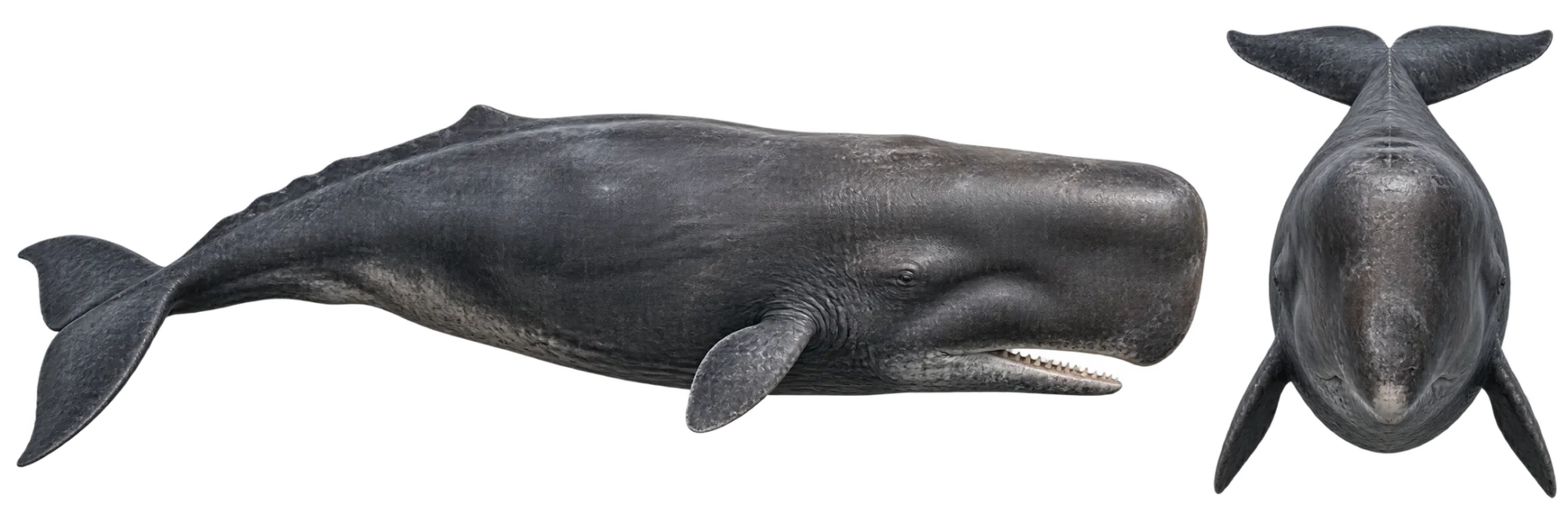
The life history of the sperm whale, Physeter macrocephalus, is shaped by long maternal investment and sharply different developmental paths for females and males. A calf remains connected to its mother and her social unit for years, while young males eventually leave that social world and continue growing long after puberty. Age, body size, sexual maturity and active breeding therefore mark different stages rather than one simple transition into adulthood.
A Single Calf Extends Across Several Years
Female sperm whales reproduce slowly even after they become sexually mature. Gestation lasts roughly 14 to 16 months and normally produces one calf. Birth is followed by another long period of investment rather than a rapid return to breeding.
Calves can begin taking solid food before they are a year old, yet nursing may continue for several years. Weaning is therefore better understood as a gradual change in how the calf obtains energy, not as an abrupt point when maternal dependence ends.
This prolonged care helps explain the spacing between births. A female commonly produces a calf only about once every five to seven years. The interval includes pregnancy, lactation and the continuing demands of raising a young whale. As a result, even an adult female living for many decades can produce only a limited number of calves.
Female sexual maturity is usually reached around nine years of age, but body growth does not stop at that point. Growth slows after reproductive maturity and females may not reach full physical size until roughly their thirties. Reproductive maturity and physical maturity are therefore separate events in the female life course.
Calf Rearing Takes Place Within a Stable Social Unit
A sperm whale calf develops within more than a mother-calf pair. Females and their young usually live in stable social units containing roughly ten or a dozen animals. These units are often based around maternal relationships and can persist for many years.
This social structure fits the unusual demands created by deep-water feeding. Adult sperm whales can spend long periods underwater while searching for prey, but young calves cannot immediately match those deep, extended dives. Calves may remain closer to the surface while their mothers forage.
Other members of the social unit can accompany a calf during these periods. Long-term field studies have documented calves moving between different adult companions while much of the group is diving. This behavior is commonly described as alloparental care or babysitting.
The exact pattern is not identical everywhere. Studies from different ocean regions have found differences in which females provide most of the care. Nursing by females other than the calf’s mother has also been recorded in some groups, while other studied groups showed escorting without such nursing. Shared care is therefore part of sperm whale social life, but its form can vary between social units and populations.
Calves can also affect relationships within the group. Research following known individuals has found that whales involved in calf care may become more central to the unit’s social network. A new calf is therefore not simply another member of the group; its need for surface companionship can change how adults spend time with one another.
Young Males Leave Before Becoming Breeding Adults
Male and female sperm whales begin life in the same female-led social units, but their paths separate as males grow. Young males eventually leave their natal units, usually during the broad period from later juvenile development through adolescence. Females generally remain associated with their social units.
After leaving, males increasingly use temperate and higher-latitude waters. Younger males may associate with other males of similar age and size. These groups tend to become smaller as the whales grow older, and large adult males are often encountered alone.
Puberty Comes Well Before Full Male Size
Male development is unusually prolonged. Puberty can extend across much of the second decade of life, yet reaching sexual maturity does not mean that a male has reached his adult body size or has begun breeding regularly.
Males continue substantial growth through their thirties. Full physical maturity may not be reached until around 50 years of age. This extended growth produces the strong adult size difference between the sexes: mature males can become far larger than adult females even though the difference is much less pronounced during their early years.
Active Breeding Usually Comes Later
Sexually mature young males are not necessarily regular participants in mating. Large males generally begin taking a more active breeding role in their late twenties or later. Mature males periodically return toward the warmer regions occupied by female social units, where their associations with females are temporary rather than permanent membership in those units.
The geographic pattern of sperm whales consequently changes with sex and life stage. Groups in tropical and subtropical waters commonly contain females and young animals, while progressively older and larger males may range much farther toward higher latitudes. The largest males can spend much of their adult lives apart from the stable social communities in which they were born.