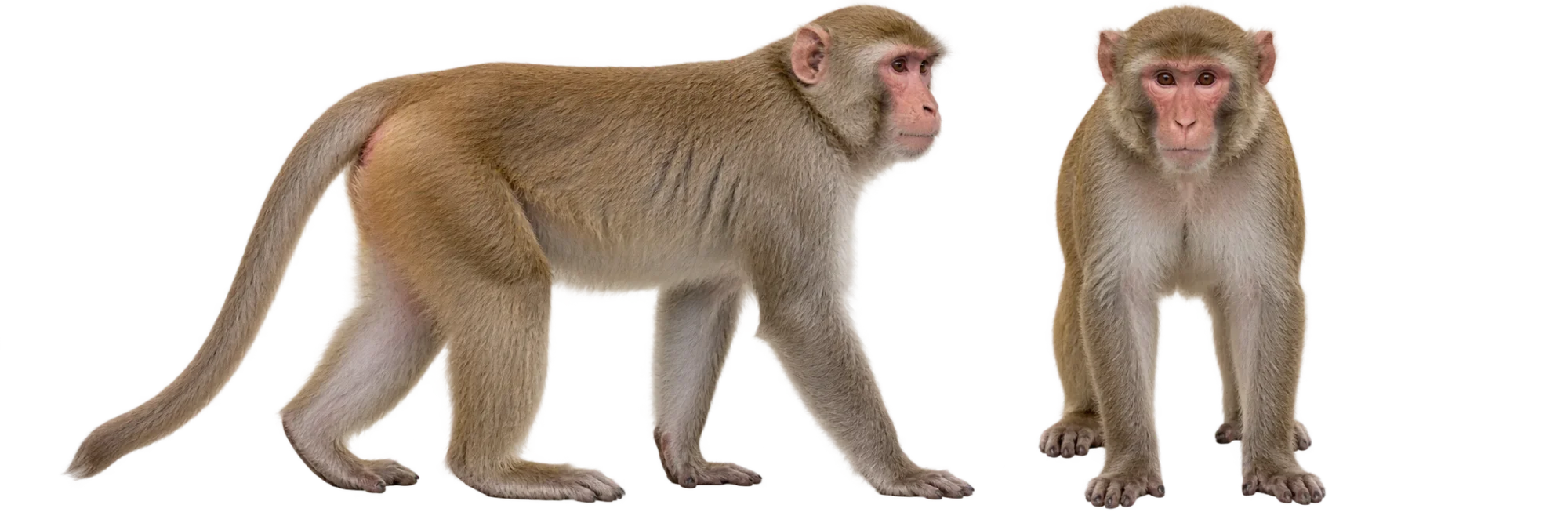
The rhesus monkey, or rhesus macaque (Macaca mulatta), moves through adulthood on different schedules depending on sex, season, maternal condition and social position. Females can begin producing young while their own growth is still being completed, while males may be sexually mature for several years before reaching adult size and regular reproductive success.
Breeding Follows a Seasonal Calendar
Rhesus monkeys usually concentrate mating and births into particular parts of the year rather than reproducing at the same rate in every month. The exact calendar varies among populations. In strongly seasonal environments, mating commonly occurs during autumn or early winter, placing births near periods when food conditions are more favorable. At Cayo Santiago in Puerto Rico, the mating season has been recorded over a broader period extending from roughly July through December.
This population variation matters because there is no single breeding month that describes the species everywhere. A study of females kept in indoor-outdoor conditions in Chongqing, China, for example, found regular reproductive cycles mainly from October through February, followed by less regular cycles during the rest of the year.
Gestation lasts about 164 to 165 days. Nearly all births involve one infant. The timing of conception therefore links one breeding season with a birth several months later, producing recognizable annual birth cohorts in well-studied populations.
Successful rearing also affects the next reproductive attempt. A female that raises an infant may not reproduce again as quickly as one whose pregnancy fails or whose young dies early. Lactation, infant care and the timing of the next breeding season are connected parts of the same reproductive schedule.
Females and Males Enter Reproductive Life on Different Schedules
Female rhesus monkeys may reach puberty near three years of age, but puberty and a successful first birth are separate milestones. In a study of 108 captive females, the age at first viable infant ranged from 2.92 to 5.10 years. About 81% produced their first infant during their fourth year.
The females that reproduced unusually early were not simply younger versions of the others. Earlier birth within their own birth season, faster juvenile growth and higher social rank were associated with reproduction at three years of age. These early breeders were still investing resources in their own growth, and researchers found lower milk production than in females that began reproducing later.
Young males may become sexually mature around four years of age, yet adult body size is reached much later, around eight years in commonly cited longitudinal observations. Male reproductive performance changes during this interval as body condition, fighting ability, social experience and access to females develop.
The sexes also follow different social routes as they mature. Females generally remain in their natal group and spend adult life among maternal relatives. Most males leave the group in which they were born. Long-term work on Cayo Santiago places most male natal dispersal between approximately 3 and 5.5 years, with a median near 4.5 years. A young male may therefore encounter puberty, departure from his natal group and integration into another group within the same part of his life.
Infant Independence Develops in Stages
A newborn rhesus monkey begins life in almost continuous physical association with its mother. During the first days, the infant usually clings to her underside while she travels. Short periods of riding on the mother’s back can begin within the first few weeks.
Physical independence therefore develops well before social independence. Even after an infant can walk and climb on its own, maternal access still affects feeding, protection and social development. Other females, especially young females and maternal relatives, may handle or remain close to infants, adding another social layer to early development.
Large demographic studies also show that maternal influence on survival is strongest early in life. In Cayo Santiago records covering thousands of offspring, the identity and condition of the mother were especially relevant during the first month, while environmental and individual differences became more prominent as juveniles grew older.
Birth Spacing Changes Across a Female’s Adult Life
Rhesus females can produce young in consecutive birth seasons, but annual reproduction is not guaranteed. A commonly reported interval between births is about 12 to 24 months, with considerable variation among individual females and across populations.
Long-term records from Cayo Santiago show how that interval changes with age. In an analysis of 1,800 births, interbirth intervals averaged about 432 days. Among females from four through 18 years old, the average remained near 426 days. By age 19, the average had risen to about 541 days, and longer gaps became more common at still older ages.
The probability of missing an entire birth season followed the same pattern. About 15% of females between four and 18 years skipped at least one year between births in that data set. The proportion was about 25% at age 19 and exceeded half among females at age 22.
These records show why a single interbirth value cannot describe reproductive pace throughout life. A healthy young adult may produce infants in closely spaced seasons, while an older female may continue reproducing but with longer pauses between successful births.
Fertility Declines Before the Oldest Recorded Ages
Female rhesus monkeys can remain reproductive well into adulthood, but fertility begins to decline before the end of the potential lifespan. Studies of free-ranging females have found lower live-birth rates with advancing age, while ovarian studies show depletion and deterioration of ovarian follicles in females approaching their twenties.
Rhesus macaques also undergo a menopausal transition. Physiological studies of older females place menopause at roughly 25 years of age, although reproductive aging develops gradually rather than beginning at one exact birthday. Changes in cycle regularity, ovarian condition and the probability of successful reproduction can appear earlier.
Late-life reproductive decline should be separated from longevity. A female that is no longer reproducing has not necessarily reached the end of her life. Free-ranging rhesus macaques have survived into their late twenties, and some long-term studies include animals approaching 30 years old.
The verified maximum longevity listed for Macaca mulatta in the AnAge database is 40 years in captivity. This is an exceptional recorded maximum, not the expected lifespan of every rhesus monkey and not a measure of normal survival in the wild.
Captive survival can differ from free-ranging survival because food supply, veterinary care, injury risk and other sources of mortality are different. For life-history comparisons, reproductive aging, typical survival patterns and maximum longevity are therefore separate measurements rather than interchangeable versions of lifespan.
 Olive BaboonPapio anubis