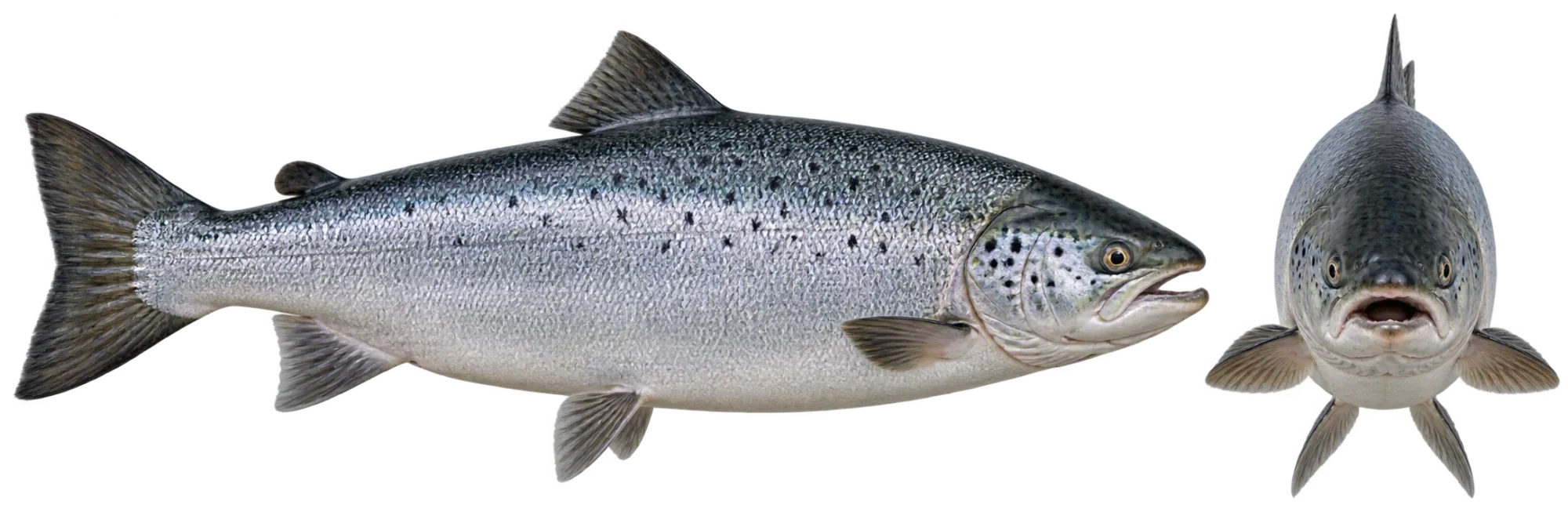
Atlantic salmon (Salmo salar) can arrive at the same spawning grounds after very different developmental histories. One fish may leave fresh water relatively early, another may remain as a parr for several years, and some males can reproduce while still living in the river. For salmon that migrate to sea, the number of ocean winters adds another layer of variation before the first spawning run.
Parr Can Spend Years Before Becoming Smolts
Atlantic salmon hatch in freshwater, but ocean migration does not begin at a fixed age. After emerging from the gravel and passing through the fry stage, young salmon develop the dark vertical markings associated with the parr stage. This freshwater period can occupy a large part of the fish’s early life.
Across the species’ range, parr may remain in fresh water for one to several years before smolting. Fisheries and Oceans Canada describes freshwater residence extending from about one to six years in some populations, while two-year smolts are common in several North American and European stocks. Even within a region, the dominant smolt age can differ among rivers.
This variation matters because chronological age alone does not define when a salmon is ready to migrate. Growth rate, water temperature, food availability, population density and local conditions can alter how quickly juveniles develop. A slow-growing parr may therefore remain in the river longer than a faster-growing fish from another population.
The familiar river-to-ocean sequence describes anadromous Atlantic salmon. Landlocked populations also exist, showing that migration to the Atlantic Ocean is not an absolute requirement for every population belonging to the species.
Smoltification Links River Growth to Ocean Migration
A parr does not become a marine fish simply by swimming downstream. Before entering seawater, it passes through smoltification, a coordinated change in physiology, appearance and behavior.
The dark parr pattern fades and the body becomes more silvery. At the same time, changes in the gills and other organs prepare the fish to regulate water and salts under marine conditions. Its migratory behavior also shifts toward downstream movement. In many populations, smolts leave rivers during spring, when seasonal conditions provide the biological cues associated with migration.
This transition also connects the outward journey with the salmon’s later return. During the smolt period, young fish develop memories of chemical characteristics associated with their home river. Years later, those olfactory cues can help returning adults identify natal freshwater as they approach the final part of their spawning migration.
Sea entry begins a very different growth phase. Food opportunities in the marine environment allow Atlantic salmon to grow much faster than they normally do as freshwater parr. The amount of time spent feeding at sea then becomes one of the main sources of variation in adult size and age.
Grilse, Multi-Sea-Winter Fish, and Mature Parr Follow Different Paths
Adult Atlantic salmon cannot be assigned one universal age at first reproduction. Their total age depends on both freshwater age before smolting and sea age before returning. These two periods vary independently enough to create several life-history routes within the same species.
| Life-History Route | What It Represents |
|---|---|
| Mature male parr | Some males become sexually mature while still small and living in fresh water. They can participate in spawning without first completing an ocean feeding migration. |
| Grilse or 1SW | Sea-going salmon that return after one winter at sea. They are generally smaller than fish that delay their first return for additional ocean growth. |
| Multi-sea-winter salmon | Fish that spend two or more winters at sea before their spawning return. Additional marine growth commonly produces larger adults. |
The mature-parr pathway is especially distinctive. It is an alternative male reproductive tactic rather than a juvenile stage through which every salmon passes. Small mature parr can fertilize eggs during spawning events involving much larger sea-returning adults, so body size alone does not identify whether a male Atlantic salmon has reached reproductive maturity.
Among anadromous fish, spending another year at sea postpones first reproduction but provides more time for rapid marine growth. This is why sea-age labels describe an important biological difference rather than merely different-sized versions of the same adult stage.
Research on Atlantic salmon also shows that maturation timing has both genetic and environmental components. Temperature, population of origin and variation associated with the vgll3 region can influence whether maturation occurs earlier or later. As a result, age at maturity is better treated as a variable life-history trait than as a single species-wide number.
Kelts Make Repeat Spawning Possible
Spawning usually takes place in freshwater gravel beds. A female excavates a nest known as a redd, deposits her eggs, and covers them with gravel after fertilization. The adult fish has spent large amounts of stored energy reaching the spawning grounds and reproducing, so the period immediately afterward is physically demanding.
An Atlantic salmon that has spawned is called a kelt. Many adults die after their first reproductive event, but death after spawning is not biologically inevitable in this species. Some kelts survive, migrate back toward marine feeding areas, restore body reserves and later return to freshwater for another spawning season. This ability to reproduce in more than one season is known as iteroparity.
There is no useful single percentage that describes repeat spawning across all Atlantic salmon populations. The proportion of returning previous spawners changes among rivers, regions and years, and southern and northern populations can show different patterns.
Repeat spawners can matter beyond their numerical share of a run. Surviving adults have already completed at least one full migration and reproductive cycle, and additional feeding at sea can produce large returning fish. Studies of northwest Atlantic populations have found that previous spawners can make an important reproductive contribution in years when fewer first-time adults return.
A surviving kelt may therefore move from river to sea and back again, adding another complete migration to a life history that has already crossed freshwater and marine environments several times.